 Medical Equipment
 Hospital Furniture
 Medical Disposables
 Rehabilitation
 Diagnostic & Labware
 Eyes & ENT
 Critical Care Equipment
 Urology
 Aesthetic & Dermatology Equipment
 Gastroenterology
 OT Equipment
By Devendra Sharma On 31-08-2026 at 4:20 pm
Types of Autoclave Machines Explained: A Full Guide
A single missed sterilization cycle can undo every other infection-control measure a hospital has in place. For CSSD teams, lab administrators, and purchase managers, choosing among the different types of autoclave machines is not a routine equipment decision, it directly affects surgical safety, instrument turnaround time, and compliance during audits. Understanding how these machines work and where each type fits is the first step toward building a sterilization setup that actually holds up under daily hospital load.
What Is an Autoclave and How Does Steam Sterilization Work?
An autoclave is a sealed chamber that uses pressurized saturated steam to destroy bacteria, viruses, fungi, and spores on medical instruments, glassware, and other reusable items. Unlike boiling water, which tops out at 100°C, steam under pressure inside an autoclave reaches temperatures well above that threshold. This combination of heat, pressure, and moisture penetrates microbial cell walls and denatures proteins, achieving a level of sterility that dry heat or chemical disinfection alone cannot match.
The basic steam sterilization process follows a consistent sequence regardless of the machine type:
Air removal from the chamber (either by gravity displacement or active vacuum)
Steam admission until the set temperature and pressure are reached
A holding phase where items are exposed to sterilizing conditions for a defined time
Exhaust of steam and pressure release
A drying phase so instruments come out ready to pack or use
Any residual air pocket inside the chamber or inside a wrapped instrument tray can prevent steam from reaching every surface, which is why air removal method is one of the biggest differences between autoclave types, and one of the main reasons sterilization failures occur.
Types of Autoclave Machines
Hospitals, clinics, diagnostic labs, and CSSDs do not all have the same sterilization needs, which is why several types of autoclave machines have evolved to serve different loads, volumes, and instrument geometries.
Gravity Displacement (Vertical) Autoclaves
Gravity displacement autoclaves rely on a simple principle: steam is lighter than air, so as it enters the chamber from the top, it pushes denser air out through a drain vent at the bottom. These are typically vertical, top-loading units, common in smaller labs, clinics, and diagnostic centers because they are simple to operate and maintain. They work well for solid, unwrapped instruments, glassware, and liquids, but since air removal depends on gravity alone, they are less effective for densely packed or wrapped loads where trapped air pockets can block complete steam contact.
Pre-Vacuum / High-Vacuum Autoclaves
Pre-vacuum (also called high-vacuum or dynamic-air-removal) autoclaves use a mechanical vacuum pump to actively pull air out of the chamber before steam enters, often through several pulses of vacuum and steam injection. This active air removal makes steam penetration far more thorough, which is essential for wrapped instrument sets, porous loads such as fabric drapes, and instruments with lumens or narrow channels. Cycle times are generally shorter than gravity models, and these autoclaves typically include a vacuum-assisted drying phase that leaves packs dry and ready for storage, making them the preferred choice in CSSDs and surgical settings handling wrapped or high-volume loads.
Tabletop / Benchtop Autoclaves
Tabletop or benchtop autoclaves are compact units designed for clinics, dental practices, small diagnostic labs, and outpatient facilities that do not need a large CSSD-grade system. They can be gravity displacement or pre-vacuum in design, but their defining feature is the small footprint and chamber size, usually a limited number of litres, suited to handheld instruments, small trays, and moderate daily throughput. For a single-doctor clinic or a small pathology lab, a reliable benchtop steam sterilizer for hospitals-adjacent use is often the most practical entry point into proper in-house sterilization.
Horizontal Pass-Through Autoclaves for CSSD
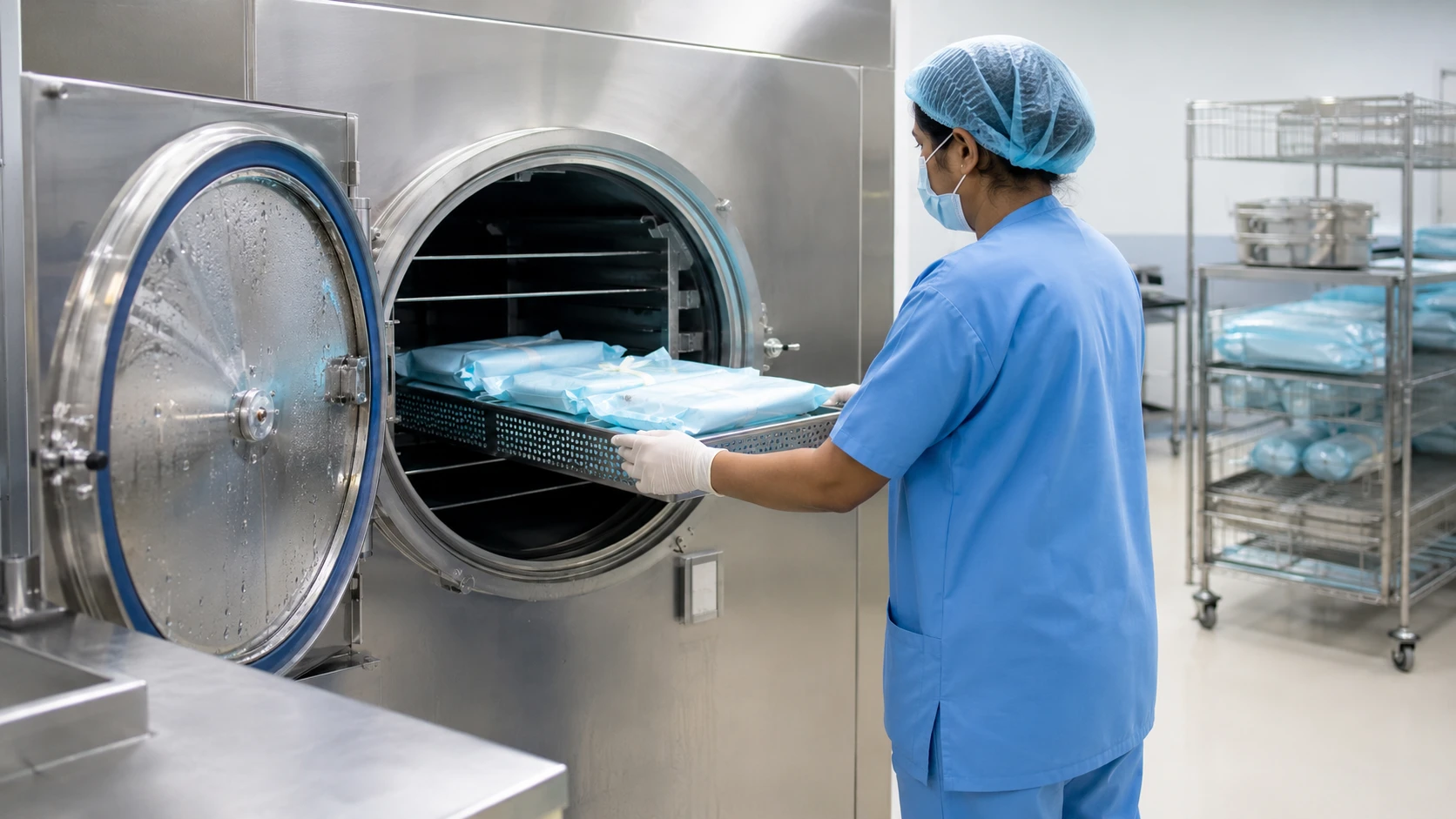
Horizontal, double-door pass-through autoclaves are built for high-volume sterile processing departments. Instruments are loaded from the "dirty" side and unloaded from a physically separate "clean" side, preventing cross-contamination between processed and unprocessed items, a core principle of CSSD design. These units generally have large chamber capacities, support multiple load types per cycle, and integrate with automated documentation and monitoring systems. Given their size and utility requirements, they are typically found in mid-to-large hospitals with centralized sterile supply operations rather than standalone clinics.
Key Factors to Consider When Choosing an Autoclave
Selecting the right autoclave among the many types of autoclave machines on the market comes down to matching the equipment to actual departmental workload and infrastructure. A few factors matter most:
Chamber capacity: Measured in litres, this determines how many trays or packs fit per cycle. Undersized capacity creates bottlenecks during peak OT schedules; oversized capacity wastes utilities and space.
Cycle time: Faster cycles help high-turnover CSSDs and OTs (see our OT Setup Checklist) keep instrument supply moving, but should never be shortened at the expense of validated parameters.
Validation and monitoring: A dependable autoclave should support routine checks, including the Bowie-Dick test for pre-vacuum machines and compatibility with biological and chemical indicators.
Footprint and installation space: Tabletop units suit small rooms; pass-through systems need dedicated CSSD space with separate clean and dirty zones.
Utility requirements: Steam supply, water quality, electrical load, and drainage all need assessment before installation.
Maintenance and spares: Sterilizer downtime affects surgical and diagnostic schedules directly, so serviceability matters as much as specifications.
Sterilization Process and Validation Steps
A safe autoclave sterilization process depends as much on correct operating procedure as it does on the machine itself. Proper loading is the first checkpoint, packs should be arranged to allow steam circulation, with wrapped items placed on their edges rather than stacked flat, and the chamber never overloaded beyond its rated capacity.
Once the cycle runs through its air removal, exposure, and drying phases, validation confirms that sterilization conditions were actually achieved, not just that the machine completed a cycle. Common validation and monitoring methods include:
Bowie-Dick test: A daily test run in pre-vacuum autoclaves, before the first processing load, to confirm effective air removal and steam penetration inside the chamber.
Chemical indicators: Strips or tape that change color on exposure to sterilizing conditions, used inside and outside each pack as a quick visual check.
Biological indicators: Spore-based tests that verify actual microbial kill, considered the most reliable confirmation of sterility and typically run at a defined frequency for each load type.
Documentation: Recording cycle parameters, indicator results, load contents, and operator details for every cycle, which supports traceability during internal quality checks and external audits.
Together, these steps form the backbone of any CSSD equipment guide for hospitals working toward consistent, auditable infection-control practices, rather than relying on the sterilizer's cycle-complete indicator alone.
Sourcing Verified Autoclave and CSSD Equipment
Once a facility has identified the type and specification it needs, sourcing becomes the next challenge, particularly finding new equipment from manufacturers who can back it with proper documentation and after-sales support. HOSPkart is a B2B healthcare procurement marketplace that connects hospitals, clinics, diagnostic centers, and nursing homes across India with certified manufacturers and verified sellers of new autoclave and CSSD equipment. Every listed supplier is GST-verified, and the platform supports Pan-India delivery, making it easier for purchase managers to compare specifications, capacities, and vendors on one reliable B2B platform rather than through scattered, unverified channels. For teams evaluating their next sterilization purchase, browsing verified options on HOSPkart is a practical starting point.
Key Takeaways
Choosing among the types of autoclave machines available today comes down to matching chamber capacity, air-removal method, and validation capability to your department's actual workload, a gravity displacement unit for simple loads, a pre-vacuum system for wrapped and complex instruments, a tabletop model for small clinics, or a horizontal pass-through autoclave for a centralized CSSD. Whatever the choice, consistent use of the Bowie-Dick test, chemical and biological indicators, and thorough documentation is what turns a sterilizer into a dependable part of your infection-control program (pair it with our ICU Setup Checklist for broader infection-control planning), and sourcing that equipment from verified, certified suppliers helps ensure it performs reliably from day one.

Author
Devendra Sharma
Related posts


15-4-2026
Top 20 Lab Equipment for Diagnostic Labs