 Medical Equipment
 Hospital Furniture
 Medical Disposables
 Rehabilitation
 Diagnostic & Labware
 Eyes & ENT
 Critical Care Equipment
 Urology
 Aesthetic & Dermatology Equipment
 Gastroenterology
 OT Equipment
By Devendra Sharma On 31-08-2026 at 4:44 pm
OT Setup Equipment Checklist for Hospitals in India
Setting up a new operating theatre, or expanding an existing one, is one of the most capital-intensive and detail-heavy projects a hospital undertakes. Between clinical equipment, infrastructure design, and regulatory compliance, it is easy for procurement teams to miss a critical item until construction is already underway. A structured OT setup equipment checklist helps hospital administrators, facility planners, and procurement teams move through this process systematically, avoiding costly last-minute additions or non-compliant installations.
Whether you are building a single OT for a nursing home or planning a multi-theatre surgical block for a large hospital, the categories below cover the core equipment, furniture, infrastructure, and compliance considerations that belong on every OT equipment list India-wide, regardless of city or state.
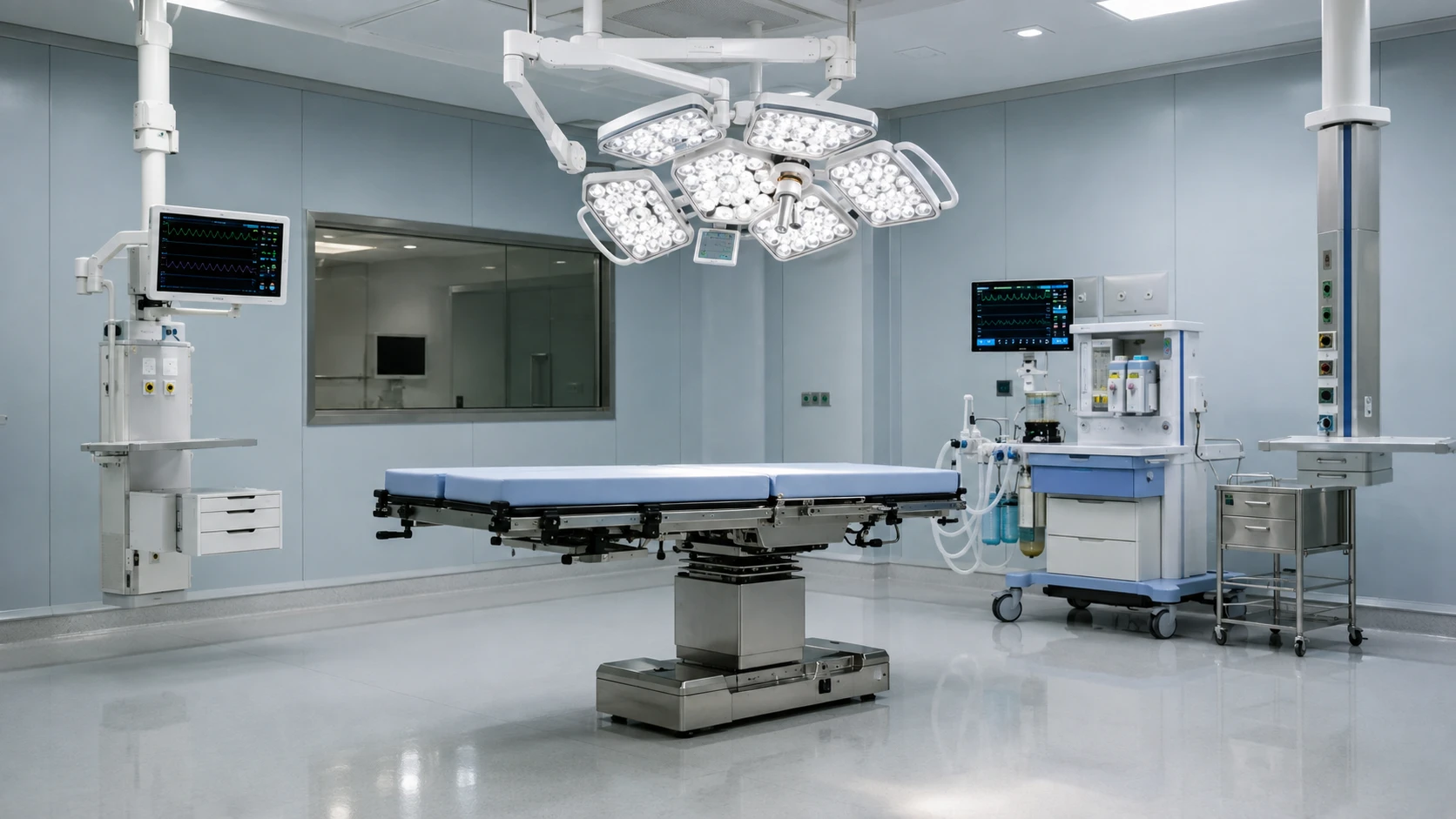
OT Tables and Lighting
The OT table and lighting system form the physical center of the theatre and directly affect surgical precision and patient safety.
Electric or hydraulic OT table with multi-position adjustability (Trendelenburg, reverse Trendelenburg, lateral tilt)
Radiolucent tabletop for C-arm compatibility, where imaging is required
Specialty tables or attachments for orthopedic, urology, or ENT procedures, if relevant to case mix
Ceiling-mounted LED OT lights with shadow-free illumination and adjustable color temperature
Mobile or satellite examination lights for backup or secondary procedures
Battery backup for lighting systems in case of power interruption
Anesthesia and Airway Management Equipment
Anesthesia infrastructure is one of the most tightly regulated and safety-critical parts of any OT setup equipment checklist, since it directly manages patient breathing and vitals during surgery.
Anesthesia workstation with integrated ventilator and vaporizer
Medical gas supply lines (oxygen, nitrous oxide, medical air) with pipeline or cylinder backup
Anesthesia gas scavenging system
Laryngoscopes, endotracheal tubes, and airway management kits
Suction apparatus, both fixed and portable units
Capnography and gas monitoring modules integrated with the anesthesia machine
Patient Monitoring Equipment
Continuous, reliable monitoring is non-negotiable in an OT environment, and this equipment should be selected with redundancy in mind.
Multi-parameter patient monitors (ECG, SpO2, NIBP, temperature)
Invasive blood pressure monitoring modules for high-risk cases
Pulse oximeters, both integrated and standalone
Infusion and syringe pumps
Patient warming systems to manage intraoperative hypothermia
Sterilization and CSSD Support
A functioning Central Sterile Supply Department (CSSD) is essential to any surgical unit setup guide, since it directly supports infection control across every procedure performed.
Autoclaves sized to the theatre's case volume (tabletop or floor-standing)
Ultrasonic cleaners for instrument pre-cleaning
Instrument sterilization trays, containers, and wrapping materials
Hand hygiene stations at OT entry points and scrub areas
Storage systems that maintain sterile integrity until instruments reach the table
Emergency and Crash Cart Equipment
Every OT, regardless of specialty, must be equipped to respond to intraoperative emergencies without delay.
Defibrillator, ideally with pacing capability
Fully stocked crash cart with emergency medications and airway adjuncts
Emergency drug tray, checked and restocked on a defined schedule
Backup oxygen cylinders positioned for immediate access
Fire extinguishers rated for electrical and clinical environments
OT Furniture and Trolleys
Beyond the major clinical equipment, functional furniture keeps the theatre organized and workflow-efficient.
Instrument trolleys and Mayo stands
Surgeon's stools with adjustable height
Anesthesia trolleys for drug and equipment storage
Kick buckets and waste segregation bins compliant with biomedical waste norms
Wall-mounted storage units and glove dispensers to reduce clutter near the sterile field
Infrastructure and Compliance Basics
Equipment alone does not make an OT functional or compliant. Infrastructure design and regulatory readiness are equally important parts of any surgical unit setup guide.
HVAC and Air Quality
The OT's HVAC system should maintain positive pressure relative to adjoining areas, controlled temperature and humidity, and a defined number of air changes per hour. Many hospitals incorporate laminar airflow systems over the OT table, particularly for orthopedic, cardiac, or transplant procedures, to reduce airborne contamination risk. HEPA filtration is generally recommended for air handling units serving OT complexes.
NABH and Accreditation Considerations
Hospitals planning to pursue NABH accreditation, or already accredited, should align OT design and equipment selection with applicable facility and patient safety standards from the outset. Retrofitting a theatre to meet accreditation requirements after construction is typically more expensive and disruptive than building compliance in during the initial setup phase.
Biomedical Waste Management
OT areas generate biomedical waste that must be segregated at the point of generation, using color-coded bins and containers as per applicable waste management rules. Hospitals should tie into a licensed biomedical waste disposal contractor and train OT staff on segregation protocols before the theatre goes live.
Fire Safety
Fire safety planning for an OT should account for the presence of oxygen and other medical gases, electrical equipment density, and the need for clear evacuation routes. This typically includes fire-rated doors, smoke detection suited to a clinical environment, and clearly marked emergency exits, reviewed as part of the hospital's overall fire safety compliance.
Indicative OT Setup Cost Considerations
Understanding the operation theatre setup cost early in the planning process helps hospitals budget realistically and avoid mid-project surprises. It is important to note that costs vary widely and the following is only an approximate, indicative framing, not a fixed estimate.
Key factors that influence overall spend include:
Number of OTs being set up and whether it is a new build or an expansion of existing infrastructure
Specialty focus, since cardiac, neuro, or transplant OTs typically require more advanced monitoring and imaging integration than general surgical theatres
Choice between modular OT construction and conventional civil construction with retrofitted systems
Equipment tier, brand, and whether tables, lights, and anesthesia workstations are basic or advanced configurations
HVAC complexity, including laminar flow systems and HEPA filtration requirements
Compliance-related costs tied to NABH readiness, fire safety systems, and biomedical waste infrastructure
Because these variables differ significantly by hospital size, location, and specialty, hospitals are generally advised to obtain detailed quotations from equipment suppliers and infrastructure contractors rather than relying on a single national average figure.
Sourcing OT Equipment: Why It Matters
Once the OT setup equipment checklist is finalized, the next challenge is sourcing reliable, compliant equipment from trustworthy suppliers across multiple categories. This is where HOSPkart supports hospitals, clinics, diagnostic centers, and nursing homes across India. As a reliable B2B platform, HOSPkart connects healthcare facilities with certified manufacturers and verified, GST-verified sellers of new OT equipment, from tables and lighting to anesthesia machines, defibrillators, and monitoring systems. With Pan-India delivery, hospital procurement teams can consolidate their OT equipment list India-wide sourcing through a single, verified marketplace instead of managing multiple disconnected vendors. Explore HOSPkart's supplier network to compare options for your next OT setup or expansion project.
Key Takeaways
Setting up or expanding an OT involves far more than purchasing a table and a light. A well-organized OT setup equipment checklist spanning tables and lighting, anesthesia and airway equipment, monitoring, sterilization, emergency preparedness, furniture, infrastructure, and compliance ensures nothing critical is overlooked. Since operation theatre setup cost varies significantly based on specialty, scale, and construction approach, early planning and sourcing from verified suppliers are essential to keeping the project on budget, on schedule, and compliant from day one. Hospitals planning critical care areas alongside their OT can also refer to our ICU Setup Checklist for a similar equipment-by-equipment breakdown of what an ICU requires.

Author
Devendra Sharma
Related posts


15-4-2026
Top 20 Lab Equipment for Diagnostic Labs