 Medical Equipment
 Hospital Furniture
 Medical Disposables
 Rehabilitation
 Diagnostic & Labware
 Eyes & ENT
 Critical Care Equipment
 Urology
 Aesthetic & Dermatology Equipment
 Gastroenterology
 OT Equipment
By Devendra Sharma On 31-08-2026 at 4:16 pm
Refurbished Imaging Equipment Safety: What to Check
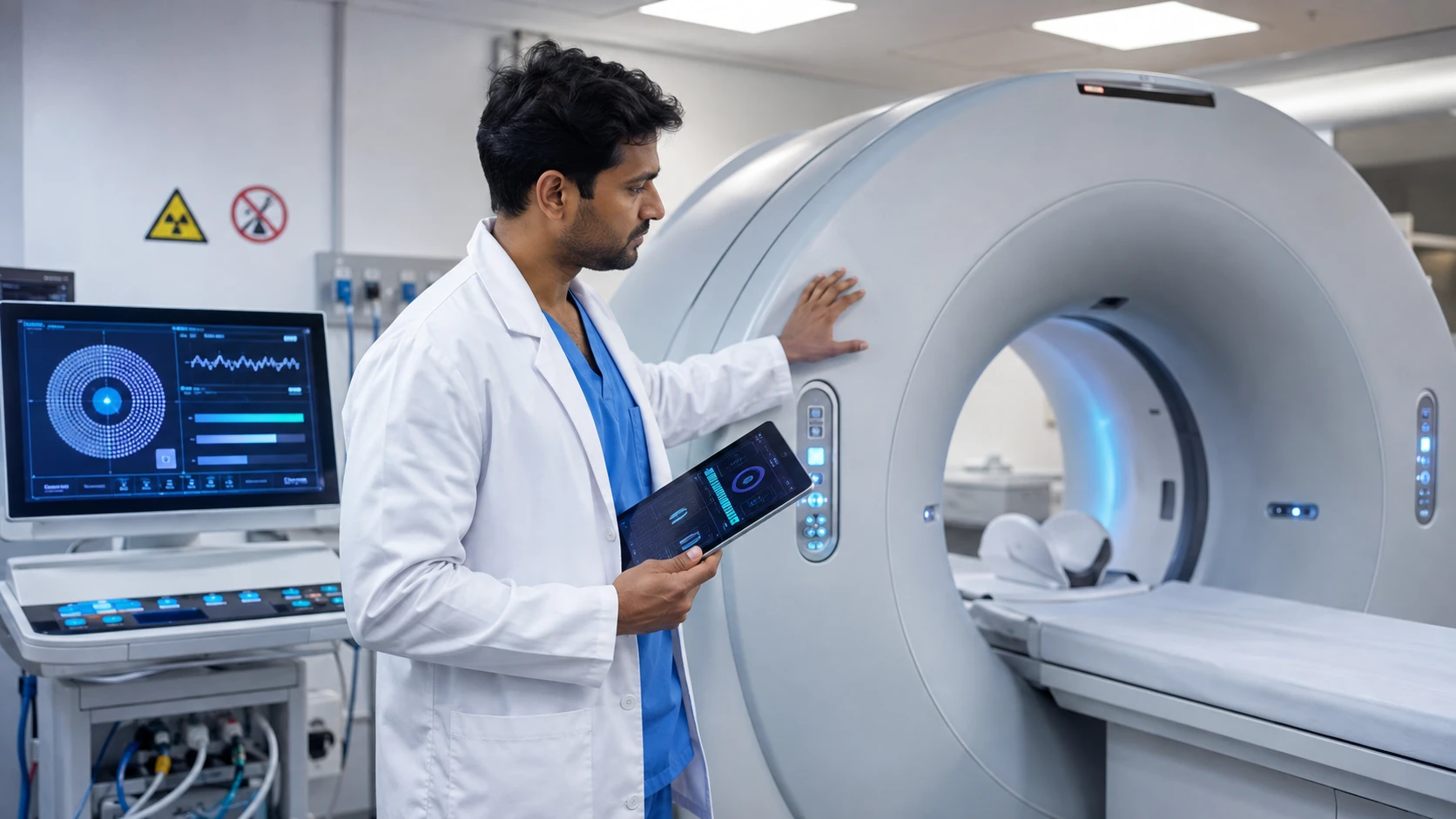
Every radiology department head eventually faces the same budget conversation: a CT scanner is nearing end-of-life, the replacement quote runs into crores, and someone on the procurement committee asks, "What about a refurbished unit?" It's a fair question. Refurbished imaging equipment can cost 40-60% less than new, which matters enormously for a growing diagnostic center or a hospital expanding into a second city. But imaging systems are not laptops or office furniture; they involve radiation, precision calibration, and patient safety in ways that make the buying decision genuinely more complex. Understanding refurbished imaging equipment safety in real, practical terms is what separates a smart purchase from a costly mistake.
What "Refurbished" Actually Means for Imaging Equipment
The term "refurbished" covers a wide range of actual conditions, and this is where a lot of confusion (and risk) enters the picture. At one end, a refurbished CT scanner or MRI machine may have been fully de-installed by an authorized technician, shipped to a certified facility, stripped down to its major components, tested against original manufacturer specifications, and rebuilt with new or manufacturer-approved parts. At the other end, "refurbished" can simply mean a unit was wiped down, given a cosmetic once-over, and resold with minimal component-level testing.
Neither of these extremes is announced clearly on a sales brochure, which is why the label itself tells you very little. What matters is the process behind it: who performed the refurbishment, what standards they followed, and what documentation exists to prove it. This is the first and most important filter when assessing refurbished CT scanner risk or evaluating any refurbished MRI machine in India. The seller's refurbishment process matters more than the brand name on the machine.
Key Safety and Quality Factors to Check
Calibration and Performance Testing
Imaging accuracy depends on precise calibration. A refurbished unit should come with documented proof of a full calibration cycle performed after refurbishment, not just at the time it was originally installed years ago. Ask for the calibration report and the date it was generated, and confirm it was done using manufacturer-approved test protocols and phantoms.
Radiation Safety and AERB Compliance
For any equipment that emits ionizing radiation (CT scanners, X-ray systems, mammography units), regulatory compliance is non-negotiable in India. The Atomic Energy Regulatory Board (AERB) requires registration, periodic quality assurance testing, and adherence to radiation safety norms for such equipment, regardless of whether it is new or refurbished. Before purchase, hospitals should confirm the equipment can be registered with AERB in the buyer's name, that shielding and room layout meet current requirements, and that the seller can support the paperwork needed for compliance. This is one area where cutting corners on refurbished imaging equipment safety can create both a patient risk and a regulatory liability.
Remaining Component Life
CT tubes, MRI coils, detectors, and gradient coils are wear items with finite lifespans measured in scan hours or years of use. A refurbished machine that looks pristine externally may have a tube or detector nearing the end of its useful life, which translates into unplanned downtime and expensive replacement costs soon after purchase. Ask specifically for the remaining estimated life on major wear components, not just the age of the machine.
Service History and Documentation
A well-documented service history (original installation date, maintenance logs, prior repairs, and any incident reports) gives real insight into how a machine was used and cared for. Gaps in documentation are a warning sign, not necessarily proof of a problem, but they do mean you are buying with less certainty about the equipment's true condition.
Warranty and Support Considerations
Imaging equipment warranty coverage looks very different in the refurbished market compared to new equipment. New systems typically come with a manufacturer warranty covering parts, labor, and often preventive maintenance for a defined period. Refurbished equipment warranties vary widely: some reputable refurbishers offer meaningful coverage (six months to a couple of years) backed by their own service network, while others offer minimal or no warranty at all.
Before committing, clarify exactly what the warranty covers: is it parts only, or parts and labor? Does it include the imaging-specific components like the tube or coils, which are often excluded or capped separately? And critically, is there a service technician network actually available in your city, since imaging equipment downtime directly affects patient care and revenue. A refurbished machine with a vague or unenforceable warranty shifts nearly all the ongoing risk onto the hospital.
Questions to Ask Any Refurbished Equipment Vendor
Who performed the refurbishment, and are they an accredited or manufacturer-authorized facility?
Can you provide the full service and maintenance history for this specific unit?
What is the documented remaining life on the tube, detector, or coil components?
Will this equipment be eligible for AERB registration and ongoing compliance in our facility?
What does the warranty specifically cover, for how long, and who provides local service support?
Are original manufacturer spare parts available, and for how many more years?
Can we arrange an independent third-party inspection before finalizing the purchase?
Due-Diligence Checklist Before Buying Refurbished
Verify the refurbisher's accreditation or manufacturer authorization
Request calibration and quality assurance reports post-refurbishment
Confirm AERB registration eligibility and radiation safety compliance
Review complete service history and prior maintenance records
Get written documentation of remaining component life (tube, detector, coils)
Clarify warranty terms in writing: coverage, duration, and exclusions
Confirm local spare parts and service technician availability
Arrange an independent inspection or demo before purchase
Compare total cost of ownership, not just upfront price, against a new unit
When Refurbished Can Be Reasonable and When New Is Safer
Refurbished imaging equipment is not inherently unsafe. For hospitals with tight budgets, a genuinely well-documented refurbished ultrasound machine or a CT scanner from an accredited refurbisher, with clear warranty terms and confirmed AERB compliance, can be a sound and practical choice, particularly as a secondary or backup unit, or for facilities just beginning to build out imaging capacity.
New equipment becomes the safer path when the budget allows it, when the department cannot absorb downtime risk, when spare parts for an older model are becoming scarce, or when the seller cannot produce clear documentation. In those cases, the cost gap often narrows once you account for warranty coverage, compliance support, and reduced downtime risk on a new system. For a closer, side-by-side look at how the two options compare on cost, risk, and support, see HOSPkart vs PrimedeQ.
Sourcing Verified New Equipment Through HOSPkart
When new equipment does fit the budget, working with verified manufacturers and sellers removes much of the uncertainty that comes with the refurbished market. HOSPkart connects hospitals, clinics, diagnostic centers, and nursing homes across India with certified manufacturers and verified sellers of new medical equipment, backed by manufacturer warranty and GST-compliant invoicing. For imaging-adjacent and broader hospital equipment needs, this means Pan-India delivery, verified supplier credentials, and documentation that stands up to compliance review from day one, without the due-diligence burden that refurbished purchases require. Hospitals evaluating their next equipment purchase can browse verified new equipment listings on HOSPkart as part of that comparison.
Key Takeaways
Refurbished imaging equipment safety comes down to documentation, accreditation, and transparency, not the word "refurbished" itself. A rigorously refurbished machine from a credible source, with proven calibration, confirmed AERB compliance, clear remaining component life, and an enforceable warranty, can serve a hospital well. A poorly documented one, regardless of price, shifts significant clinical and financial risk onto the buyer. The right decision depends on your budget, your risk tolerance, and how much due diligence you and the vendor are willing to put in before the machine reaches your imaging suite, and when the numbers work, sourcing new equipment from verified suppliers remains the lowest-risk path forward.

Author
Devendra Sharma
Related posts



15-4-2026
Top 20 Lab Equipment for Diagnostic Labs