 Medical Equipment
 Hospital Furniture
 Medical Disposables
 Rehabilitation
 Diagnostic & Labware
 Eyes & ENT
 Critical Care Equipment
 Urology
 Aesthetic & Dermatology Equipment
 Gastroenterology
 OT Equipment
By Devendra Sharma On 31-08-2026 at 4:05 pm
HOSPkart vs PrimedeQ: New vs Refurbished Equipment
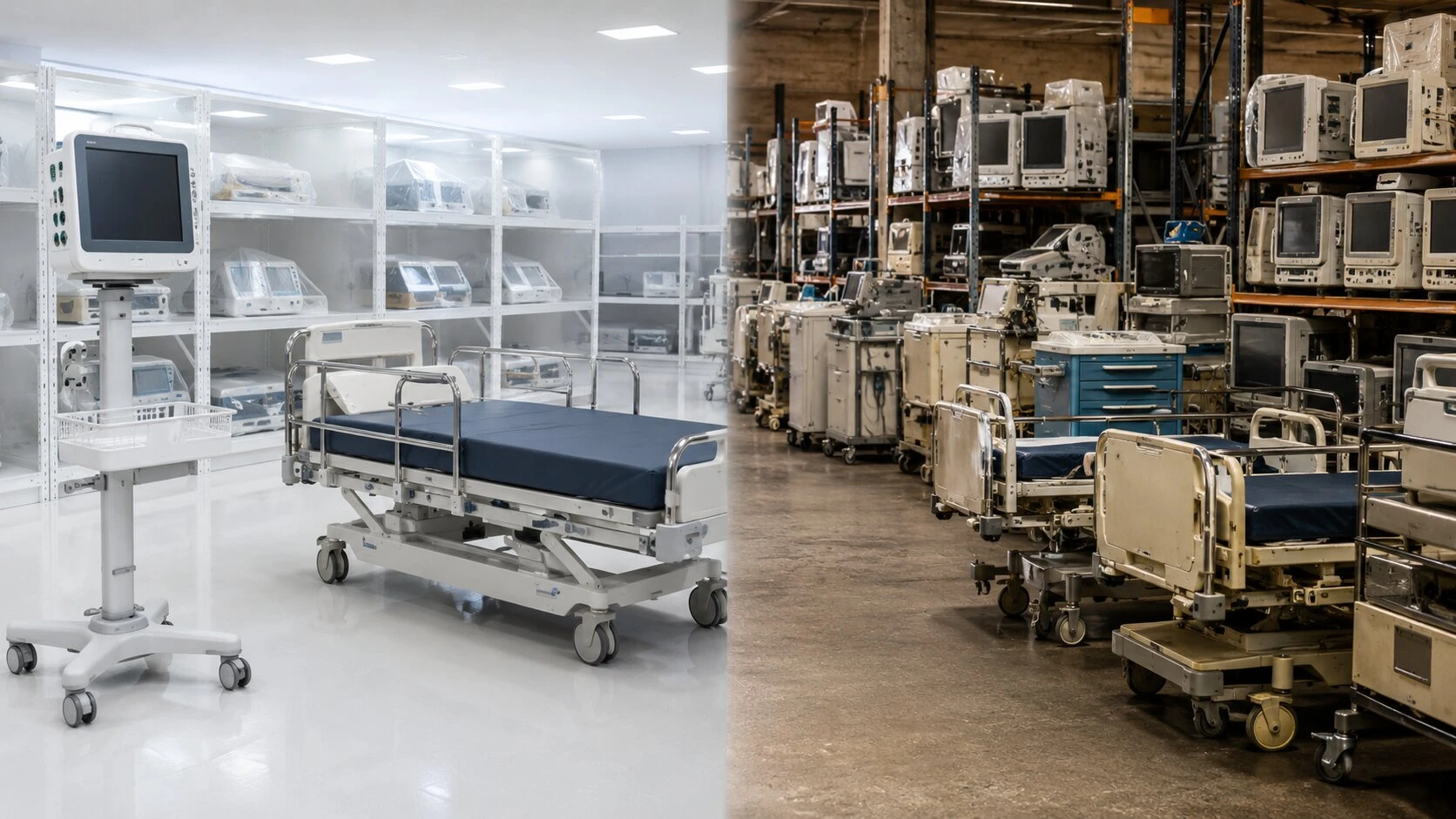
Every hospital procurement manager eventually faces the same fork in the road: buy new equipment at full price with a warranty attached, or save money on a refurbished unit that may or may not perform as expected five years down the line. This is exactly the decision buyers face when comparing HOSPkart vs PrimedeQ, two very different marketplace models serving India's healthcare equipment sector. One focuses on new, verified equipment with manufacturer backing; the other specializes in used and refurbished devices at a lower entry cost. Understanding what each model actually offers is the first step to making a procurement decision you won't regret.
Two Different Marketplace Models
Before comparing features line by line, it helps to understand what each platform is built for.
HOSPkart is a B2B healthcare procurement marketplace that connects hospitals, clinics, diagnostic centers, and nursing homes across India with certified manufacturers and verified sellers of new medical equipment. The entire catalog (from hospital furniture and beds to critical care and OT equipment, laboratory and diagnostic devices, monitoring equipment, disposables and PPE, trolleys and carts, sterilization and CSSD equipment, rehabilitation gear, and ophthalmic, ENT, and dermatology devices) consists of new units sold by GST-verified suppliers.
PrimedeQ, by contrast, is an online platform built around buying, selling, and renting used and refurbished medical equipment and spares in India. It also offers equipment repair services, making it a resource for facilities looking to liquidate old assets, source lower-cost used imaging and lab equipment, or get existing machines repaired rather than replaced.
Neither model is inherently "better" in isolation; they're built for different procurement needs. The right choice depends on what you're buying, what it's used for, and how much risk your facility can absorb.
HOSPkart vs PrimedeQ: Feature-by-Feature Comparison
This table is a starting point, not the whole story; the right answer often depends on the specific equipment category and your facility's risk tolerance.
Where New, Verified Equipment Matters Most
For certain categories, the case for new equipment sourced through a verified medical equipment seller India platform is straightforward. Critical care and OT equipment (including ventilators, anesthesia workstations, defibrillators, ICU beds, and patient monitors used in ICUs) directly affect patient outcomes if they fail or perform inconsistently. Imaging-adjacent lab equipment and diagnostic devices need calibration accuracy that's easiest to guarantee when the device has a known, unused history and manufacturer documentation (see Is Refurbished Imaging Equipment Safe for Your Hospital for a deeper look at this trade-off).
There's also the compliance angle. Indian hospitals and diagnostic centers operating under NABH or NABL accreditation frameworks, or handling devices that fall under CDSCO's Medical Device Rules, need clean documentation trails: proper GST invoicing, traceable ownership history, and manufacturer certification. New equipment from certified manufacturers makes this documentation straightforward. With used or refurbished equipment, buyers need to do additional diligence on service history, prior usage, and remaining component life. This isn't impossible, but it's an extra layer of work that some procurement teams would rather avoid, especially for equipment tied to patient safety.
Manufacturer warranty is another differentiator worth weighing seriously. When a new ventilator or monitoring device comes with a manufacturer warranty, the hospital has a clear path for repairs, part replacements, and service escalation. This matters most for high-usage departments like ICUs and OTs, where downtime isn't just inconvenient; it directly affects patient care.
Where Refurbished Equipment Still Makes Sense
None of this means refurbished equipment is the wrong choice for every situation. Budget-constrained clinics, small nursing homes, and facilities in tier-2 and tier-3 cities often operate on tight capital budgets, and a lower-cost used option from a platform like PrimedeQ can be a practical way to get functional equipment on the floor without a large upfront investment.
Refurbished equipment also fits well for non-critical use cases: backup beds, secondary trolleys, administrative or waiting-area furniture, or equipment used infrequently where the consequences of a fault are inconvenient rather than dangerous. Facilities scaling up quickly, or opening a new wing on a limited timeline, may find used equipment a faster and cheaper way to fill gaps while planning bigger new-equipment purchases separately.
If your facility is exploring a PrimedeQ alternative because you specifically need new equipment with manufacturer backing, rather than a like-for-like used equipment marketplace, that's really a different sourcing decision, not a straight substitute (our Top Alternatives to PrimedeQ roundup covers this comparison in more depth). It comes down to matching the platform to the purpose: used equipment for cost-sensitive, lower-risk needs, and new equipment for anything where warranty, compliance, and reliability carry more weight than upfront savings.
Making the Right Call for Your Facility
The real question in any new vs refurbished medical equipment marketplace decision isn't which platform is "better"; it's which model matches the specific purchase in front of you. A diagnostic lab buying its primary analyzer, or a hospital equipping a new ICU, has very different risk tolerance than a clinic replacing a waiting-room bed or a nursing home adding backup furniture.
A practical approach many Indian healthcare procurement teams use is to segment their equipment list by criticality. Patient-safety-critical and high-usage equipment goes through verified new-equipment channels with manufacturer warranty and clean GST documentation. Lower-risk, non-critical, or backup equipment can reasonably be sourced used, provided the buyer does proper due diligence on condition and service history.
Key Takeaways
HOSPkart focuses on new equipment from certified manufacturers and GST-verified sellers, with manufacturer warranty and pan-India delivery.
PrimedeQ focuses on used and refurbished equipment, plus repair services, generally at a lower entry price point.
For critical care, OT, imaging, and other patient-safety-critical equipment, new and verified sourcing reduces compliance and reliability risk.
Refurbished equipment remains a legitimate option for budget-constrained facilities and non-critical or backup equipment needs.
The smarter procurement strategy for most Indian hospitals and clinics is to match the sourcing model to the equipment category, not to pick one platform for every purchase.
Whichever route fits your current need, the HOSPkart vs PrimedeQ comparison ultimately comes down to a simple trade-off: verified, warrantied reliability versus lower-cost flexibility. For equipment where patient safety, compliance, and long-term support matter most, sourcing new through a verified medical equipment seller India platform like HOSPkart is generally the more defensible choice for procurement teams to stand behind.

Author
Devendra Sharma
Related posts

15-4-2026
Top 20 Lab Equipment for Diagnostic Labs