 Medical Equipment
 Hospital Furniture
 Medical Disposables
 Rehabilitation
 Diagnostic & Labware
 Eyes & ENT
 Critical Care Equipment
 Urology
 Aesthetic & Dermatology Equipment
 Gastroenterology
 OT Equipment
By Devendra Sharma On 31-08-2026 at 3:58 pm
ICU Setup Equipment Checklist for Indian Hospitals
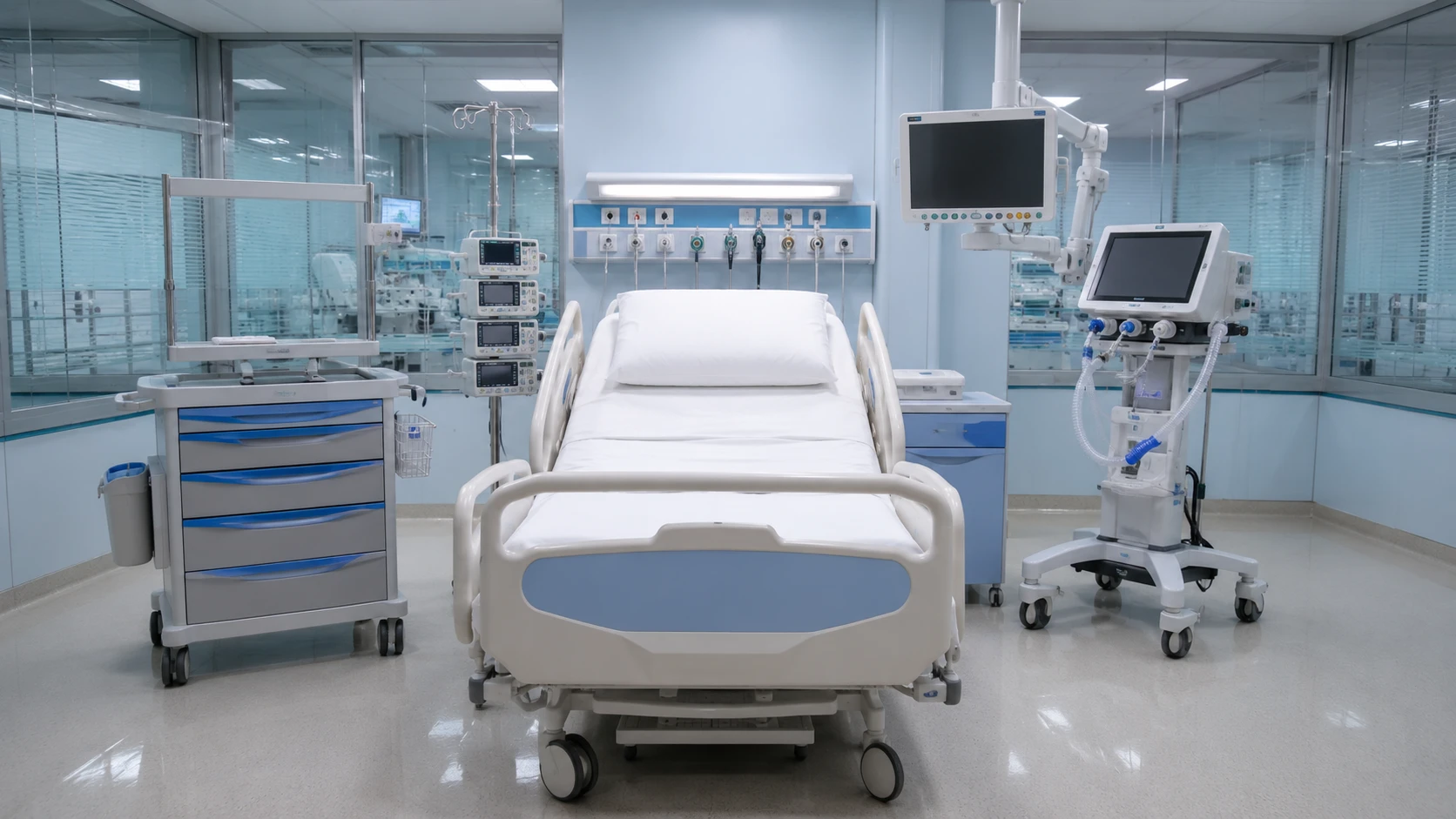
Setting up an ICU is one of the most capital-intensive decisions a hospital administrator or biomedical engineer will make, and getting the equipment list wrong is expensive in more ways than one, including rework, compliance issues, and patient safety. Whether you are opening a new critical care unit or expanding an existing one, a structured ICU setup equipment checklist helps you plan procurement systematically instead of buying piecemeal and discovering gaps later. This guide walks through every major category of equipment an Indian ICU needs, along with indicative costs and the regulatory checkpoints to keep in mind.
Why an ICU Setup Equipment Checklist Matters
An ICU is not just a ward with more machines. It is a tightly integrated environment where beds, monitoring, respiratory support, emergency response tools, and infection control all have to work together around the clock. A well-organized ICU setup equipment checklist does three things for a hospital:
Prevents last-minute gaps during NABH or CDSCO-linked inspections
Helps purchase managers budget accurately instead of underestimating capital expenditure
Ensures clinical teams have a standardized, predictable equipment environment across every bed
Use the checklist below as a working document; mark off what you already own, what needs replacement, and what has to be procured fresh from certified manufacturers.
1. ICU Beds and Furniture
The bed is the anchor of every ICU setup, and features here directly affect both patient outcomes and nursing workload.
Electric or semi-electric ICU beds with Fowler, Trendelenburg, and lateral tilt positions
Side rails and CPR-release mechanism
Overbed tables and bedside lockers
Mattress with pressure-relief or alternating air support for bedridden patients
IV stands and drip stands (mobile and bed-mounted)
Patient trolleys and wheelchairs for transfers
Examination lights where minor bedside procedures are performed
Indicatively, a good-quality electric ICU bed in India ranges from roughly INR 90,000 to INR 2,50,000 depending on features like weighing scales, X-ray compatibility, and the number of motorized functions. Actual pricing varies by manufacturer, warranty terms, and order volume.
2. Patient Monitoring Equipment
Continuous monitoring is the backbone of critical care, and this category typically accounts for a significant share of any ICU equipment list in India.
Multi-parameter patient monitors (ECG, SpO2, NIBP, temperature, respiration)
Invasive blood pressure and central venous pressure monitoring modules
Bedside pulse oximeters
Capnography (EtCO2) monitors for ventilated patients
Central nursing station monitor with networked display of all beds
Infusion pumps and syringe pumps for precise drug and fluid delivery
A standard multi-parameter monitor typically costs between INR 60,000 and INR 2,00,000 depending on parameter count and display size, while central station networking adds further cost; always confirm these figures with current vendor quotations.
3. Respiratory and Ventilation Support
Respiratory support equipment is where an ICU setup equipment checklist becomes most safety-critical, since these devices are literally life-sustaining.
ICU ventilators (invasive and non-invasive modes)
Anesthesia workstations, where the ICU also supports post-operative care
Oxygen concentrators and centralized oxygen supply points at each bed
Nebulizers and suction units (wall-mounted and portable)
Bag valve masks (Ambu bags) of appropriate adult and pediatric sizes
Humidifiers and heat-moisture exchangers
Ventilators are a major cost driver in any critical care unit equipment guide. A reliable ICU-grade ventilator can range from approximately INR 3,00,000 to INR 10,00,000 or more depending on modes, alarms, and brand, so this is an area where verifying certification and after-sales service is essential before purchase.
4. Crash Cart and Emergency Equipment
Every ICU bay, and ideally every ICU unit as a whole, needs immediate access to a fully stocked crash cart for cardiac and respiratory emergencies.
Defibrillator with monitoring and pacing capability
Emergency drug tray (as per hospital pharmacy protocol)
Laryngoscope set with multiple blade sizes
Endotracheal tubes, airways, and intubation supplies
Emergency oxygen cylinder with regulator
Backboard and cervical collar for trauma stabilization
Crash carts should be checked and restocked on a fixed schedule, and defibrillators need routine calibration. This is frequently flagged during NABH accreditation reviews, so it deserves a dedicated line item in your ICU setup equipment checklist rather than being bundled loosely with "general equipment."
5. Infection Control and Sterilization
Infection control is non-negotiable in critical care, given how immunocompromised ICU patients typically are.
Autoclaves for sterilizing reusable instruments
Hand hygiene stations at every bed and unit entry
PPE (gowns, gloves, masks, face shields)
Biomedical waste segregation bins as per CPCB and CDSCO guidelines
HEPA-filtered air handling units where budget allows
Disposable linen and single-use consumables for high-risk procedures
6. Staffing-Support Infrastructure
Equipment alone does not run an ICU; the supporting infrastructure that keeps nursing staff responsive is equally part of any complete ICU equipment list in India.
Nurse call systems at every bed with visual and audible alerts
Glass or acrylic partitions for visibility between bays and the nursing station
Documentation stations or computers on wheels for electronic charting
Adequate electrical points with backup power (UPS/generator-linked)
Storage racks for consumables close to point of use
What Does It Cost to Set Up an ICU Bed in India?
This is one of the most common questions hospital administrators ask, and the honest answer is: it depends heavily on vendor selection, bed count, city, and how much of the infrastructure (civil work, electrical, gas pipelines) is already in place.
As a rough, indicative benchmark only, the equipment cost of setting up one fully functional ICU bed (bed, monitor, ventilator, infusion pumps, and a share of shared infrastructure like the crash cart and nurse call system) commonly falls somewhere between INR 8,00,000 and INR 18,00,000 per bed in India. Budget setups with fewer features can come in lower, while units with advanced monitoring, premium ventilators, and redundant systems can run higher. These figures are illustrative estimates for planning purposes and should always be validated against current vendor quotations for your specific city, bed count, and equipment specifications.
Regulatory Checkpoints Before You Buy
Before finalizing any purchase order, confirm the following:
Equipment carries valid CDSCO registration where applicable (relevant for many Class B, C, and D medical devices)
BIS certification for applicable electrical and mechanical equipment
Supplier holds GST registration and can provide proper tax invoices
Documentation supports your NABH accreditation or renewal requirements
Warranty and annual maintenance contract (AMC) terms are clearly defined in writing
Sourcing ICU Equipment Reliably
Procurement delays and mismatched specifications are common pain points when hospitals source ICU equipment from scattered, unverified vendors. HOSPkart is built specifically to solve this: a reliable B2B platform connecting hospitals, clinics, diagnostic centers, and nursing homes across India with certified manufacturers and verified, GST-verified sellers of new medical equipment. Instead of chasing multiple local dealers for beds, monitors, ventilators, and crash cart supplies separately, procurement teams can compare verified listings across categories in one place, with Pan-India delivery support. Explore verified ICU equipment on HOSPkart to build your critical care unit equipment guide around suppliers you can actually trust. If you are setting up an operation theatre alongside your ICU, our OT setup checklist covers the same ground for OT equipment planning.
Key Takeaways
Building out an ICU is a multi-category procurement exercise, not a single purchase decision. A disciplined ICU setup equipment checklist (covering beds and furniture, monitoring, respiratory support, crash cart essentials, infection control, and staffing-support infrastructure) keeps your project on budget and audit-ready. Treat the cost figures here as directional starting points, always confirm current pricing with certified vendors, and prioritize suppliers who can demonstrate proper certification, GST compliance, and dependable after-sales support before you commit capital to any single vendor.

Author
Devendra Sharma
Related posts


15-4-2026
Top 20 Lab Equipment for Diagnostic Labs