 Medical Equipment
 Hospital Furniture
 Medical Disposables
 Rehabilitation
 Diagnostic & Labware
 Eyes & ENT
 Critical Care Equipment
 Urology
 Aesthetic & Dermatology Equipment
 Gastroenterology
 OT Equipment
By Devendra Sharma On 31-08-2026 at 4:25 pm
Centrifuge Machine Uses in Diagnostic Labs: Full Guide
In a diagnostic lab, accuracy starts long before a sample reaches the analyser. Understanding centrifuge machine uses is essential for any lab that runs blood, urine, or biochemistry tests, because a poorly chosen or poorly maintained centrifuge can distort results before testing even begins. The right machine separates components cleanly, protects sample integrity, and keeps turnaround times predictable even on a busy OPD morning. For diagnostic centre owners and lab managers, getting this one piece of equipment right has a direct bearing on both report quality and patient trust.
What a Centrifuge Does in a Diagnostic Lab
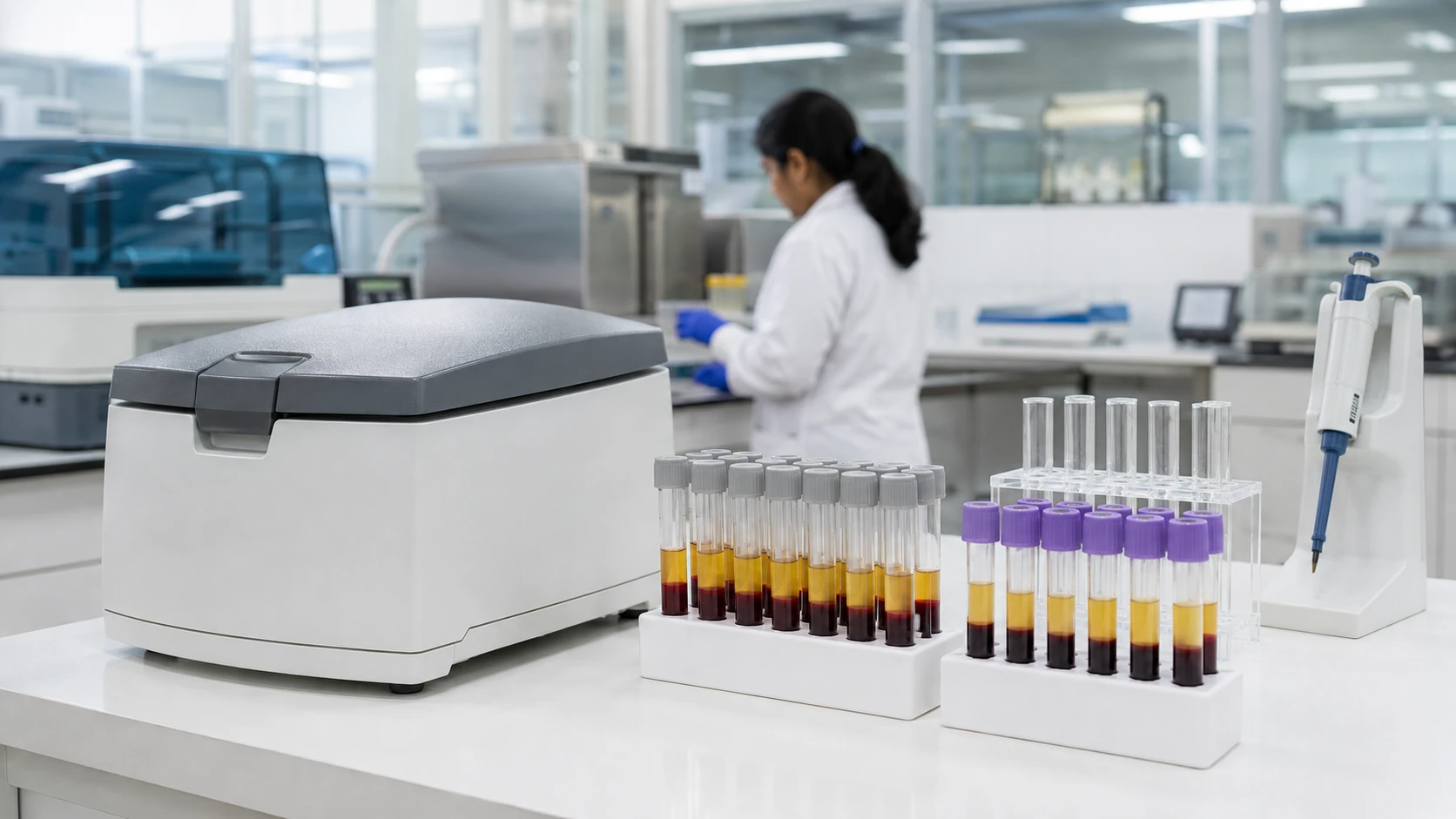
At its core, a centrifuge spins samples at high speed inside a rotor, using centrifugal force to separate components by density. Heavier particles such as red blood cells or sediment move outward and settle at the bottom of the tube, while lighter components like serum, plasma, or supernatant remain on top. This separation is measured in RPM (revolutions per minute) or, more precisely, RCF (relative centrifugal force), which accounts for rotor radius and gives a consistent, comparable value across different machines.
Nearly every major diagnostic workflow depends on this basic principle. Whether it is preparing serum for a biochemistry panel or spinning down urine sediment for microscopy, centrifuge machine uses touch almost every department in a pathology lab, from hematology to microbiology.
Types of Centrifuges Used in Diagnostic Labs
Not every lab needs the same equipment. Understanding the different types of centrifuge available helps a lab invest in the right combination of machines rather than over-buying or under-specifying capacity.
Microcentrifuges
Microcentrifuges are compact, high-speed units designed for small sample volumes, typically in 0.2 ml to 2 ml tubes. They are commonly used in molecular diagnostics, PCR sample prep, and workflows involving small aliquots that need rapid, high-RPM separation. Their small footprint suits labs with limited bench space or a dedicated molecular section.
Benchtop General-Purpose Centrifuges
This is the workhorse of most diagnostic labs. Benchtop general-purpose centrifuges handle a wide range of tube sizes and volumes, and are used daily for routine serum and plasma separation, urinalysis, and general sample prep. They typically offer swing-out or fixed-angle rotor options at RPM/RCF ranges suited to everyday clinical chemistry and hematology work. For a mid-sized diagnostic centre, a reliable benchtop unit is often the single most-used piece of equipment after the analyser itself.
Refrigerated Centrifuges
Some samples and reagents are temperature-sensitive and degrade quickly at room temperature, especially during prolonged spins or in warmer climates. Refrigerated centrifuges maintain a controlled temperature, usually around 4°C, throughout the run. These are important for certain biochemistry assays, coagulation studies, and any test where sample stability at low temperature affects result accuracy.
High-Speed and Ultracentrifuges
High-speed centrifuges and ultracentrifuges operate at significantly higher RPM/RCF than routine benchtop units and are used for specialised separations, such as isolating finer particulate matter or supporting research and reference-lab applications. These machines are less common in a standard diagnostic centre but are relevant for larger reference labs or centres offering advanced testing panels.
Hematocrit Centrifuges
Hematocrit centrifuges are purpose-built for a single, high-volume test: the packed cell volume (PCV) or hematocrit determination. They spin capillary tubes at very high speed for a short duration to pack red blood cells for quick, precise reading of the hematocrit ratio. Because hematocrit testing is among the most frequently ordered tests in any diagnostic setting, many labs choose a dedicated hematocrit centrifuge alongside their general-purpose unit rather than relying on one machine for both jobs.
Key Centrifuge Machine Uses in Diagnostic Labs
Across departments, the core centrifuge machine uses in a diagnostic centre generally fall into a few recurring categories:
Blood sample processing: Separating serum or plasma from whole blood is the first step for the majority of biochemistry, serology, and immunoassay tests.
Hematocrit and CBC-related testing: Determining packed cell volume as part of a complete blood count workup.
Urinalysis: Concentrating urine sediment so that cells, crystals, and casts can be examined under a microscope.
Microbiology sample preparation: Concentrating organisms or separating debris before culture or staining.
Coagulation and specialised testing: Preparing platelet-poor or platelet-rich plasma for specific coagulation assays.
Molecular diagnostics: Pelleting nucleic acids or cellular material during extraction workflows, typically using a microcentrifuge.
Because these applications span nearly every section of a lab, the choice of centrifuge is rarely a single decision. Most diagnostic centres end up running two or three types of centrifuge in parallel, each matched to a specific workflow rather than trying to force one machine to do everything.
What to Look for When Buying a Lab Centrifuge
Choosing the right lab centrifuge for diagnostic centre operations comes down to matching the machine's specifications to your actual test volumes and sample types, rather than simply picking the highest RPM model available.
RPM and RCF Range
Check both the maximum RPM and the RCF value at that speed, since RCF depends on rotor radius. Confirm the speed range covers your test protocols, particularly for hematocrit and coagulation work where exact RCF matters.
Rotor Capacity and Type
Rotor capacity determines how many samples can be processed per cycle, which directly affects throughput during peak hours. Swing-out rotors are generally preferred for serum/plasma separation with visible layering, while fixed-angle rotors suit higher-speed, smaller-volume work.
Refrigeration, Safety, and Noise
If your test menu includes temperature-sensitive assays, a refrigerated centrifuge is worth the added investment; for mostly routine biochemistry and hematology work, a non-refrigerated benchtop unit may be sufficient. Look also for lid interlocks that prevent opening during operation, imbalance detection that stops the rotor automatically, and a stable build that keeps noise and vibration low during long runs.
Brand Support and Service
Since a centrifuge runs multiple times a day, after-sales support, availability of spare rotors, and warranty terms matter as much as the specification sheet.
Centrifuge Machine Price: What to Expect
Centrifuge machine price varies widely by type and specification. As an approximate, indicative guide only, compact microcentrifuges and basic hematocrit centrifuges tend to sit at the lower end of the range, general-purpose benchtop centrifuges fall in the mid-range, and refrigerated or high-speed centrifuges cost more due to added cooling systems and higher-precision motors. Actual pricing depends on brand, capacity, and features, so it is worth comparing quotations from verified sellers rather than relying on a single price point.
Sourcing a Verified Lab Centrifuge on HOSPkart
Once you know which type of centrifuge fits your lab's workflow, the next step is sourcing it from a dependable supplier. HOSPkart is a B2B healthcare procurement platform that connects diagnostic centres, pathology labs, hospitals, and clinics across India with certified manufacturers and verified sellers of new medical and laboratory equipment, including centrifuges. Every listed seller is GST-verified, and HOSPkart supports Pan-India delivery, making it easier for labs outside major metros to access the same quality of equipment as larger reference labs. If you are evaluating a lab centrifuge for diagnostic centre use, browsing verified listings on HOSPkart is a practical way to compare specifications and sellers before making a purchase decision.
Key Takeaways
A diagnostic lab's centrifuge is a small piece of equipment with an outsized impact on result accuracy and daily throughput. Understanding the different types of centrifuge, from microcentrifuges to refrigerated and hematocrit units, helps a lab match equipment to its actual test menu rather than over- or under-investing. When evaluating options, weigh RPM/RCF range, rotor capacity, refrigeration needs, and safety features alongside centrifuge machine price, and choose a verified, GST-registered seller who can support the equipment after purchase. Getting these fundamentals right keeps a diagnostic centre's testing workflow reliable, day after day.

Author
Devendra Sharma
Related posts




15-4-2026
Top 20 Lab Equipment for Diagnostic Labs