 Medical Equipment
 Hospital Furniture
 Medical Disposables
 Rehabilitation
 Diagnostic & Labware
 Eyes & ENT
 Critical Care Equipment
 Urology
 Aesthetic & Dermatology Equipment
 Gastroenterology
 OT Equipment
By Devendra Sharma On 08-07-2026 at 1:13 pm
New vs Refurbished Medical Equipment: 2026 Buying Guide
Every procurement manager eventually hits the same wall: the ventilator needs replacing, the budget doesn't stretch to a brand-new unit, and someone on the finance team asks why you can't just buy refurbished. It's a fair question. It's also more complicated than a simple price comparison.
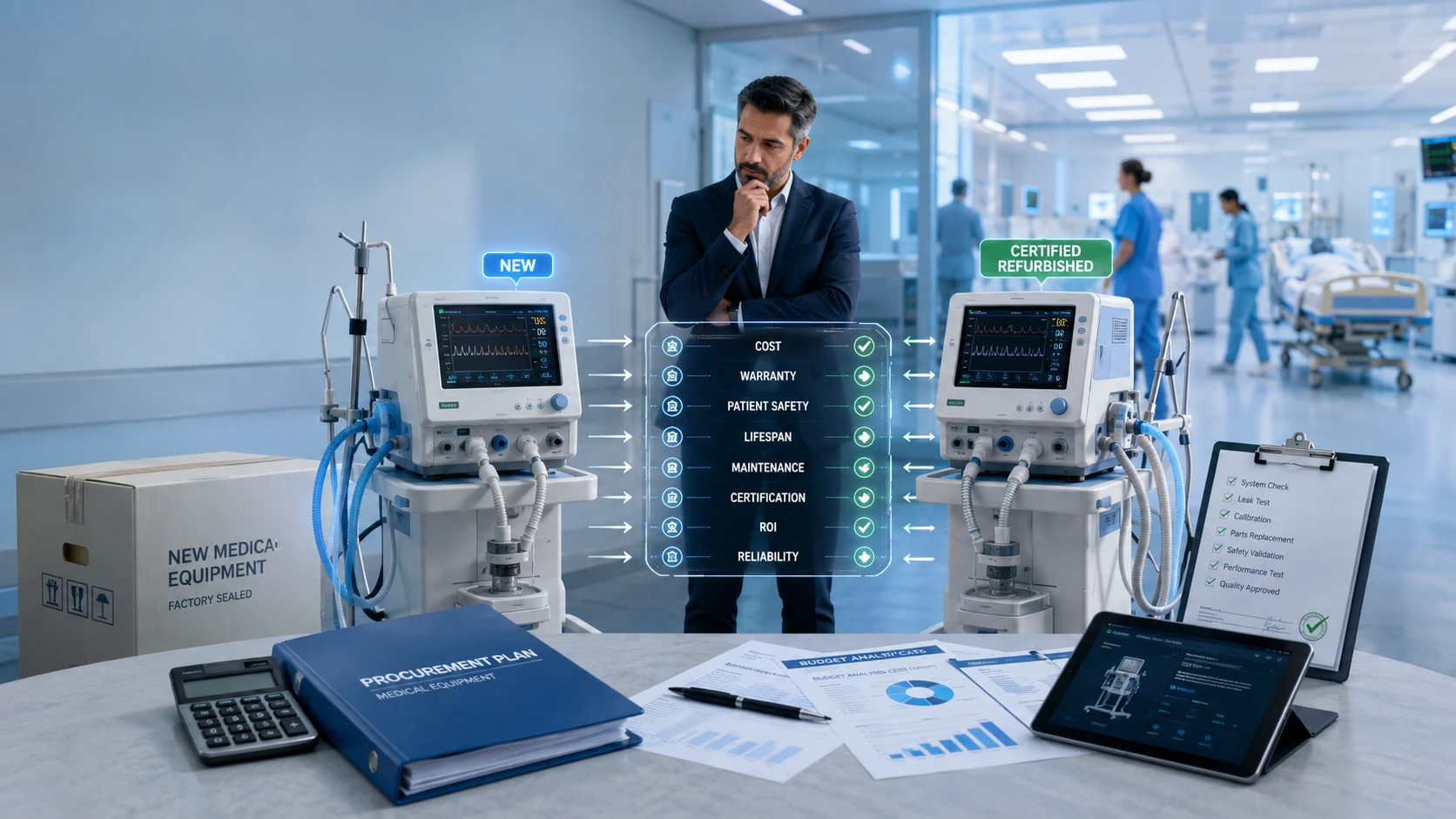
The new vs refurbished medical equipment decision touches patient safety, warranty coverage, uptime, and long-term cost, not just the number on the quote. This guide breaks down where refurbished genuinely works, where new is worth the premium, and how to tell the difference before the purchase order is signed.
What is the real difference between new and refurbished medical equipment?
New equipment ships direct from the manufacturer with full warranty and zero operating history. Refurbished equipment has been previously owned, then restored, tested, and recalibrated to meet the original manufacturer's performance specifications.
That restoration step is what separates refurbished from merely "used." A used defibrillator might be sold as-is, wear and all. A properly refurbished one has gone through component replacement, deep cleaning, calibration, and a functional test against OEM benchmarks, usually backed by some form of certification.
The confusion between the two terms is where most bad purchases start. Ask any seller for a written breakdown of exactly what was inspected, repaired, and replaced, not just the word "refurbished" on the listing.
How much can refurbished medical equipment actually save a hospital?
Refurbished equipment typically costs 30% to 70% less than a comparable new unit, with the biggest savings showing up on high-capital purchases like imaging systems and anesthesia machines. That gap is why the refurbished medical device market has grown into a multi-billion-dollar global industry.
For a district hospital or a growing diagnostic center, that discount can be the difference between buying one new ultrasound machine or three refurbished ones spread across departments. It's a meaningful lever for stretching a capital budget without cutting services.
But the sticker price isn't the whole story. Total cost of ownership includes freight, installation, staff training, spare parts availability, and how many years of useful life remain in the device. A refurbished unit priced 40% below new can still cost more per year of service if it needs replacing in three years instead of eight.
Run the math per year of expected use, not per unit price. That single adjustment changes the outcome of the new vs refurbished medical equipment comparison more often than buyers expect.
Is refurbished medical equipment safe for patient care?
Yes, when it's refurbished by a reputable provider and comes with documentation. A device that has passed calibration, safety testing, and software validation performs identically to new for the vast majority of clinical applications.
The catch is that "refurbished" isn't a legally standardized term the way a drug's generic name is. Quality varies enormously between an OEM-certified refurbishment program and an unregulated reseller who wiped the exterior and printed a certificate. Buyers carry the burden of verifying which one they're dealing with.
Before signing off, ask for the device's service history, the refurbisher's certification or ISO status, what specific parts were replaced, and whether the software and firmware were updated to the current supported version. A seller who hesitates on any of these is telling you something.
Older refurbished models also carry one underrated advantage: field history. A design flaw or recall pattern in a brand-new device hasn't had time to surface yet, while a five-year-old refurbished model's track record is already public.
When does buying new make more sense than refurbished?
New is the safer default for life-support systems, cutting-edge robotic or AI-assisted platforms, and devices facing new regulatory categories where compliance requirements are still shifting. Ventilators, anesthesia workstations, and other equipment where a failure has immediate life-threatening consequences deserve the full warranty and manufacturer support that only a new purchase guarantees.
New equipment also wins when your facility needs the latest generation of a technology, when in-house biomedical engineering capacity is thin, or when the device will be your only unit of its kind with no backup on the floor. If there's no redundancy and no time to wait on parts, the reliability premium of new equipment earns its cost.
A ventilator, for instance, is exactly the category where facilities lean toward new units backed by full OEM warranty and rapid parts support, given how little margin for downtime an ICU has.
What does the medical equipment lifecycle mean for your buying decision?
Every device has a lifecycle: manufacture, active clinical use, decline in reliability, and eventual retirement, and where a refurbished unit sits on that curve determines its real value. A refurbished unit that's two years into an expected fifteen-year lifespan is a very different purchase than one nearing year twelve, even if both are labeled "refurbished."
This is why asking for the original manufacture date, not just the refurbishment date, matters so much. A refurbisher can restore a device's function without resetting the clock on its total usable life. Bearings wear, capacitors degrade, and structural components age regardless of how thorough the servicing was.
Understanding lifecycle position also shapes your maintenance budget going forward. A device further along its lifecycle will likely need more frequent servicing and parts replacement over the next few years, which should be built into the total cost comparison, not treated as a surprise later.
What are the biggest risks of buying refurbished equipment?
The three biggest refurbished equipment risks are inconsistent refurbishment quality, shorter or thinner warranty coverage, and parts or software support that lags behind current versions. None of these are guaranteed to happen, but all three show up often enough that skipping due diligence is a real gamble.
Warranty terms deserve particular scrutiny. New equipment often comes with one to three years of full coverage; refurbished warranties frequently run 90 days to a year, and the fine print on what's actually covered varies widely between sellers. A short warranty on a complex device just means the financial risk shifts back to your facility faster.
Software and compatibility risk is easy to overlook until it isn't. A refurbished patient monitor or lab analyzer that can't run current firmware may not integrate cleanly with your existing hospital information system, creating workflow friction that erases some of the cost savings you were counting on.
What are the benefits of buying new medical equipment?
Full manufacturer warranty, guaranteed parts availability, the latest software and features, and a completely clean history are the core buying new medical equipment benefits that refurbished can't fully match. For high-use departments where downtime directly affects patient throughput, that reliability has real financial value beyond the purchase price.
New equipment also simplifies compliance documentation. There's no need to chase down a previous owner's service records or verify a refurbisher's process, since the manufacturer's own paperwork covers the device from day one. For facilities preparing for accreditation reviews, that's one less variable to manage.
There's also a technology argument. Buying new means access to the current generation of a device category, whether that's improved imaging resolution, better battery life, or updated connectivity standards that a five-year-old refurbished unit simply wasn't built with.
What should you ask a seller before buying refurbished equipment?
A short checklist protects you more than any brochure claim. Before signing off on a refurbished purchase, get clear answers to these questions:
What was the device's original manufacture date, and how many years of use does that leave in its expected lifecycle?
Who performed the refurbishment, and are they OEM-certified or independently ISO-certified?
What specific parts were replaced, and were they OEM or third-party components?
What does the warranty cover, for how long, and does it include labor or parts only?
Is the current software or firmware version supported, and for how much longer?
Can you get a written test and calibration report before delivery, not just after?
If a seller can't answer most of these clearly, treat that as a warning sign rather than a formality to skip. The equipment might still be fine, but you're buying without the information you need to know that.
How should a hospital decide between new and refurbished equipment?
Start with clinical criticality: if failure risks a patient's life and there's no backup unit, lean new. If the equipment is important but not immediately life-threatening and your biomedical team can service it competently, refurbished is often the financially smarter call.
Next, map the decision against your facility's growth plans. A hospital scaling up multiple departments at once may get more value from stretching capital across several refurbished units than concentrating it all into one new flagship machine. A single-department clinic replacing one aging system might do better buying new and holding onto it for the next decade.
Finally, weigh vendor trust as heavily as the machine itself. A well-supported refurbished purchase from a verified seller, with documentation and a real warranty, often beats a poorly supported new purchase from an unreliable one. The device is only half of what you're buying. The other half is the relationship backing it.
Where does HOSPkart fit into this decision?
Whichever way a hospital leans, sourcing matters as much as the new vs refurbished choice itself. HOSPkart is a B2B marketplace built for exactly this problem in the Indian healthcare market, connecting hospitals and clinics with verified manufacturers across ventilators, patient monitors, ICU beds, defibrillators, and autoclaves, among dozens of other equipment categories.
Because every seller on the platform is part of a verified manufacturing network, procurement teams get one place to compare specifications, request documentation, and place orders with pan-India delivery, instead of chasing multiple vendors for the same due diligence questions covered above. For facilities weighing a bulk equipment refresh across departments, that kind of centralized, certified sourcing removes a lot of the guesswork that makes the refurbished decision risky in the first place.
FAQs
Is refurbished medical equipment as good as new?
It can perform identically to new when refurbished by a reputable, certified provider with documented testing. Quality depends entirely on who did the refurbishment, not on the word "refurbished" itself.
How long do refurbished medical devices typically last?
It depends on the device's original manufacture date and how much of its lifecycle remains, not just the refurbishment date. A well-serviced refurbished unit can run for years, but always ask for the original manufacture year before buying.
What warranty should I expect on refurbished equipment?
Most reputable refurbishers offer 90 days to one year of coverage, shorter than typical new-equipment warranties. Always get the warranty terms in writing before purchase.
Can a small clinic rely entirely on refurbished equipment?
Yes, for most non-critical and diagnostic equipment where budget constraints are real and biomedical support is available. Life-support and high-risk devices are the exception where new is usually the safer call.
Does refurbished equipment meet regulatory compliance standards?
Reputable refurbishment programs restore devices to meet the original manufacturer's specifications and relevant regulatory standards. Always request compliance certificates and service documentation before purchase, since standards for what counts as "refurbished" vary by seller.
Have a specific equipment category in mind? Browse HOSPkart's verified medical equipment listings or read our guide on how to buy hospital equipment online in India for a step-by-step procurement walkthrough.

Author
Devendra Sharma
Related posts


15-4-2026
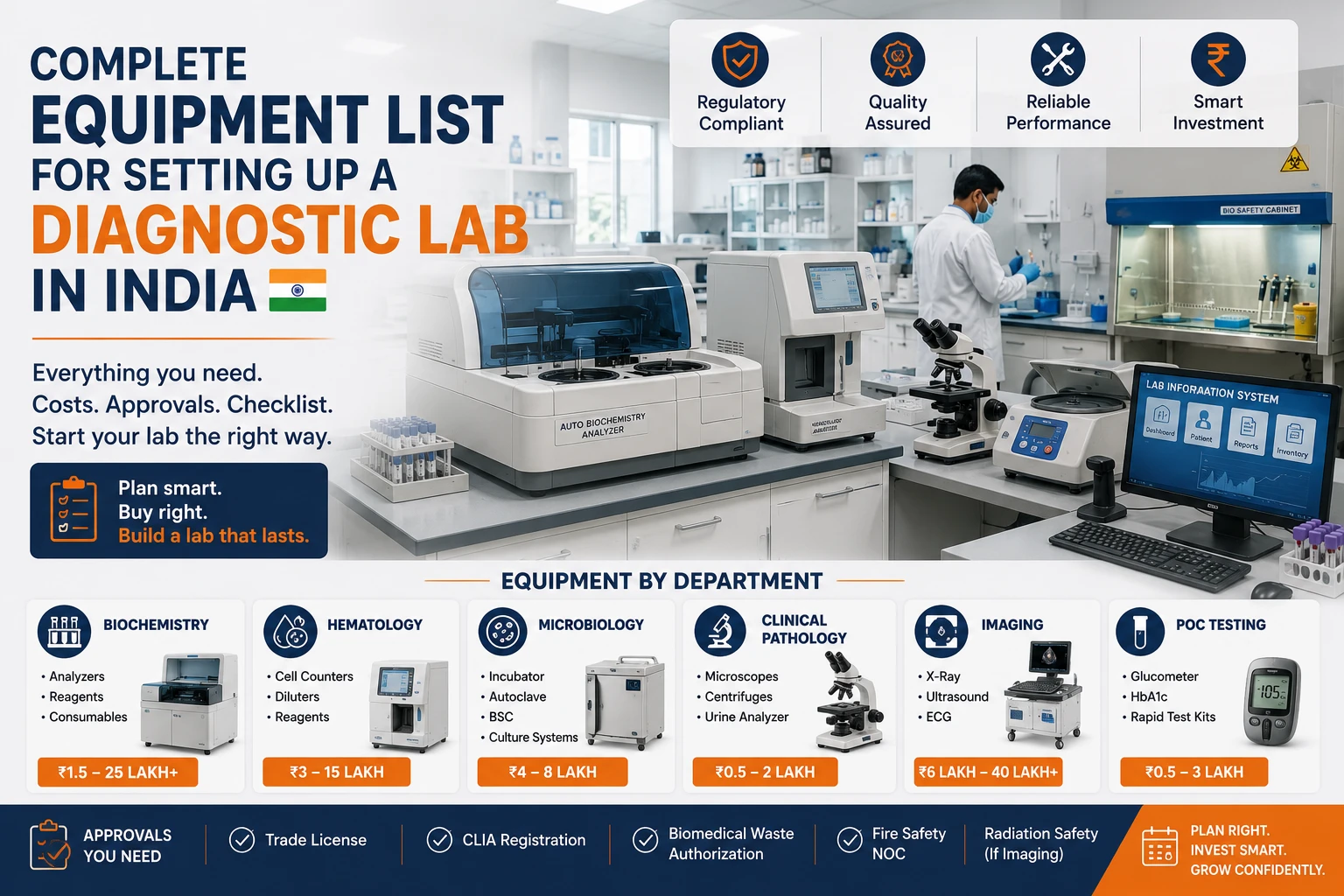
Top 20 Lab Equipment for Diagnostic Labs