 Medical Equipment
 Hospital Furniture
 Medical Disposables
 Rehabilitation
 Diagnostic & Labware
 Eyes & ENT
 Critical Care Equipment
 Urology
 Aesthetic & Dermatology Equipment
 Gastroenterology
 OT Equipment
By Hospkart On 29-06-2026 at 5:51 pm
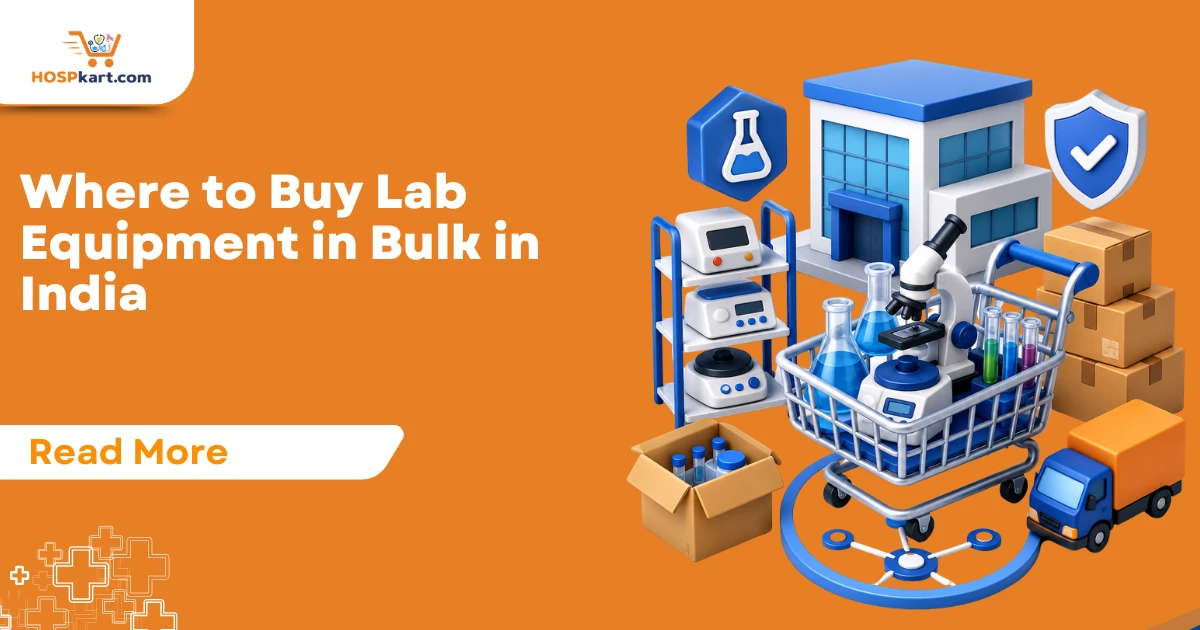
Where to Buy Lab Equipment in Bulk in India
The Indian healthcare and diagnostic industry is booming. As the number of diagnostic testing, preventive healthcare, and laboratories increases, hospitals, path labs, DI centres and research institutes need to have access to quality lab equipment and supplies that is reliable.
However, bulk purchase of laboratory equipment is not always easy.
Identifying suppliers, comparing products, evaluating manufacturers, and negotiating prices and delivery can be time-consuming for procurement teams. The problem with healthcare institutions is not just finding equipment, but the right equipment from trusted suppliers, with competitive pricing, and that will be reliable and supported over time.
Procurement in healthcare is becoming more complex, and therefore, there is a need for smarter procurement of laboratory equipment in bulk quantities.
Why Bulk Lab Equipment Procurement Is Becoming Critical in India
The demand for laboratory equipment has surged throughout India, especially in Tier-2 and Tier-3 cities, where healthcare systems are growing quickly.
New diagnostic centres are being established.
Expansion of capacity in existing pathology laboratories.
Hospitals are becoming increasingly well-equipped with cutting-edge diagnostic technology.
Medical colleges and nursing institutions are improving the laboratory infrastructure.
This expansion has led to an increased demand for effective procurement methods to be able to accommodate larger quantities without sacrificing quality or efficiency.
Bulk purchasing allows health care institutions to:
Reduce procurement costs
Improve inventory planning
Maintain product consistency
Minimize supply disruptions
Streamline purchasing processes
When an organization has a high volume of testing or patient care, it matters a great deal how they do the procurement.
Who Needs Bulk Lab Equipment?
A lot of healthcare and educational institutions can benefit from bulk procurement.
1. Hospitals
Laboratory equipment is needed in hospitals for pathology departments, diagnostic labs, and specialty testing labs.
2. Diagnostic Centres
Diagnostic chains and independent diagnostic centers use large quantities of equipment, reagents and consumables regularly.
3. Pathology Laboratories
Independent laboratories frequently need to buy instruments, testing kits, laboratory consumables and so on on a regular basis.
4. Clinics and Healthcare Facilities
The in-house diagnostic capacity is gaining importance in multi-specialty clinics and healthcare centres.
5. Research Laboratories
Specialized laboratory equipment and scientific instruments are needed in research institutions in the continuation of various projects and studies.
6. Nursing and Medical Colleges
Laboratory facilities are required for training, learning, and research activities in educational institutions.
Despite its nature, institutions have to deal with numerous common challenges while sourcing.
Common Lab Equipment Purchased in Bulk
Healthcare organizations typically procure a wide range of products, including:
Diagnostic Equipment
Hematology Analyzers
Biochemistry Analyzers
Immunoassay Systems
Electrolyte Analyzers
ELISA Readers
Laboratory Instruments
Centrifuges
Microscopes
Spectrophotometers
Incubators
Autoclaves
Laboratory Consumables
Pipettes
Test Tubes
Sample Containers
Laboratory Slides
Reagents and Diagnostic Kits
Laboratory Furniture and Infrastructure
Laboratory Benches
Storage Cabinets
Biosafety Cabinets
Workstations
The scale of procurement often depends on the size and operational requirements of the healthcare institution.
Key Challenges in Bulk Lab Equipment Procurement
Despite technological advancements, many procurement teams still face significant challenges.
1. Limited Visibility Into Available Options
Many organizations rely on a small network of suppliers, limiting their ability to compare products and manufacturers.
2. Difficulty Comparing Products
Evaluating different brands, specifications, and technical features can be time-consuming.
3. Pricing Uncertainty
Without access to multiple suppliers, procurement teams often struggle to determine whether they are receiving competitive pricing.
4. Delivery Delays
Late deliveries can disrupt operations, particularly when equipment or consumables are urgently required.
5. Supplier Dependency
Over-reliance on a single supplier increases procurement risk and limits flexibility.
These challenges often result in delayed decisions, increased costs, and operational inefficiencies.
Traditional Ways to Buy Lab Equipment in India
Healthcare institutions typically source equipment through one of the following channels.
1. Direct Manufacturers
Purchasing directly from manufacturers can provide access to competitive pricing and product warranties.
Advantages:
Direct manufacturer support
Better pricing for large orders
Access to original products
Challenges:
Limited product variety
Multiple manufacturer relationships required
2. Authorized Distributors
Distributors provide access to established brands and regional support networks.
Advantages:
Product support
Installation services
Brand-specific expertise
Challenges:
Limited comparison opportunities
Brand restrictions
3. Medical Equipment Dealers
Dealers offer products from multiple manufacturers and often provide local support.
Advantages:
Faster communication
Local availability
Challenges:
Limited inventory visibility
Variable pricing structures
While these procurement models continue to serve the industry, they often require significant time and coordination from procurement teams.
Why Digital Healthcare Procurement Platforms Are Becoming the Better Model
Healthcare procurement is undergoing a significant transformation.
Just as businesses across industries have adopted digital sourcing and procurement solutions, healthcare institutions are increasingly moving toward healthcare-focused procurement platforms.
Digital procurement platforms offer several advantages:
Better product visibility
Access to multiple manufacturers
Easier comparison of options
Improved procurement transparency
Faster sourcing decisions
Reduced dependency on fragmented supplier networks
Rather than spending days contacting multiple suppliers, procurement teams can evaluate products and sourcing options more efficiently through a centralized platform.
For hospitals, laboratories, and healthcare organizations, this approach helps reduce procurement complexity while improving decision-making.
How HOSPkart Simplifies Bulk Lab Equipment Procurement
Purchasing lab equipment in bulk isn't just about finding a supplier.
The challenge is finding the right product from the right manufacturer at the right price, with reliable delivery and after-sales support!
HOSPkart makes this easier for hospitals, diagnostic centres, pathology laboratories, and healthcare institutions by bridging the gap with verified manufacturers and trusted supply partners.
With HOSPkart, procurement teams can:
All laboratory equipment, consumables, hospital supplies, and medical categories are explored in one place.
Look around for products first to make your buying decision.
Lower reliance on a decentralized dealer network.
Get competitive B2B prices for bulk ordering needs
Ensure greater transparency of supplier selection and procurement planning
Get help with regular, critical, and monthly purchasing requirements
HOSPkart offers a safer and more efficient solution for Tier 2 and Tier 3 cities' healthcare institutions to procure laboratory equipment and medical supplies, as they are no longer stuck with dealing with multiple vendors.
Checklist Before Placing a Bulk Lab Equipment Order
Healthcare organizations should consider the following factors before making a purchase:
Product Quality: Check product certification, quality, and manufacturers.
Supplier Reliability: Evaluate delivery reliability, service quality, and support.
Price Transparency: Check several prices for competitive prices.
After-Sales Support: Check if the installation, maintenance, and technical support are available.
Product Availability: Make sure suppliers are able to provide supplies for the long-term.
Future Scalability: Select suppliers/products that are able to support future growth and expansion.
A well-defined assessment system facilitates better procurement choices.
Conclusion
Bulk laboratory machinery procurement is gaining significance in hospitals, pathology laboratories, diagnostic centres, research institutions, and health organizations in India.
Procurement needs are expanding, and healthcare institutions must have greater visibility, more robust supplier networks, and more efficient procurement processes.
Any procurement process remains significant, but digital healthcare procurement platforms are helping organizations to streamline procurement processes, create transparency, and make intelligent purchases.
Planning to buy lab equipment in bulk?
Submit your requirement on HOSPkart and our team will help you source suitable options from verified manufacturers with transparent B2B pricing and reliable procurement support.
Get Bulk Lab Equipment Quote
Talk to a Procurement Expert
Visit HOSPkart.com and simplify your laboratory equipment procurement process.

Michael is a lover, fighter and hater. He loves to travel, has an app called ‘The Travaluk’. He has travelled over 30 countries so far and dreams to visit every one of them.
Related posts


15-4-2026
Top 20 Lab Equipment for Diagnostic Labs