 Medical Equipment
 Hospital Furniture
 Medical Disposables
 Rehabilitation
 Diagnostic & Labware
 Eyes & ENT
 Critical Care Equipment
 Urology
 Aesthetic & Dermatology Equipment
 Gastroenterology
 OT Equipment
By Devendra Sharma On 16-09-2026 at 4:43 pm
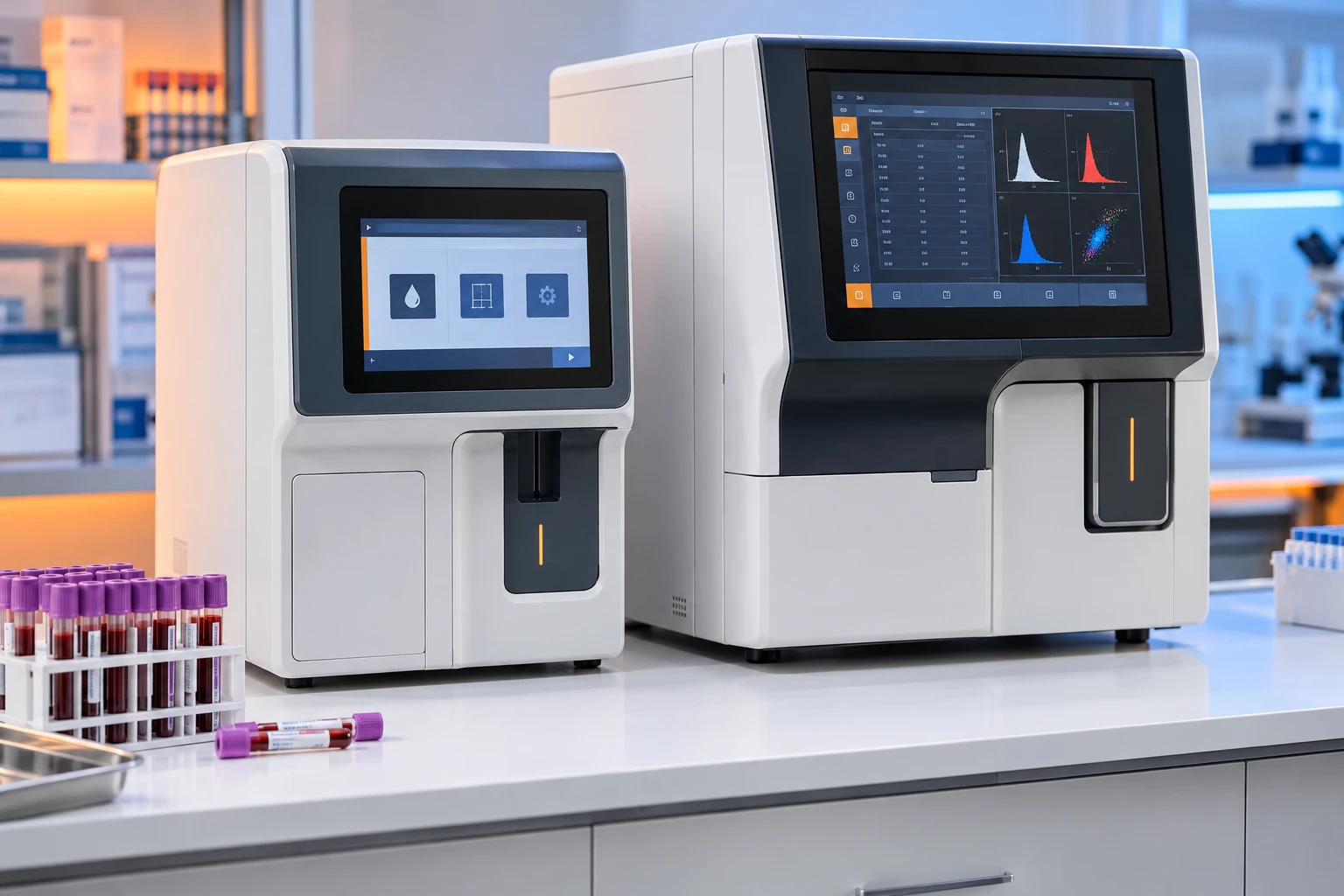
Hematology Analyzer: 3-Part vs 5-Part Guide | HOSPkart
Hematology Analyzer Buying Guide: 3-Part vs 5-Part for Indian Labs
Every diagnostic lab, from a single-room pathology clinic to a full hospital lab, runs a CBC (complete blood count) more often than any other test. The analyzer behind it is one purchase decision that quietly shapes your lab's turnaround time, report depth and repeat-customer trust for years. This guide breaks down the real difference between 3-part and 5-part hematology analysers so you buy the right one, not just the cheaper one.
Key Takeaways
- A 3-part analyzer groups white blood cells into three buckets: lymphocytes, mid-size cells and granulocytes. A 5-part analyzer separates all five WBC types individually using laser or flow cytometry-based methods.
- 3-part analyzers suit high-volume screening in clinics and smaller labs where a full differential is confirmed manually when flagged.
- 5-part analyzers suit hospital labs, diagnostic chains and any facility that needs to report accurate eosinophil, basophil and monocyte counts without manual microscopy on every sample.
- Rajasthan's growing diagnostic lab market, especially during dengue and viral fever season, is where platelet count accuracy and fast turnaround matter most.
What a Hematology Analyzer Actually Reports
A hematology analyzer runs a CBC and reports red blood cell count, white blood cell count, platelet count, hemoglobin, hematocrit and a range of derived indices, in under a minute per sample. The part of the report that differs most between analyzer types is the WBC differential, how precisely the machine breaks total white cell count into its component cell types.
3-Part vs 5-Part: The Actual Technical Difference
3-part differential
A 3-part analyzer uses electrical impedance to size white blood cells and sorts them into three groups by size alone:
- Lymphocytes (smallest)
- Mid-size cells (a combined bucket covering monocytes, eosinophils and basophils together)
- Granulocytes (largest, mainly neutrophils)
This is fast and reliable for routine screening, but it cannot separately report monocytes, eosinophils or basophils. If a report is flagged abnormal in the mid-size bucket, a lab technician still needs to prepare a blood smear and count manually under a microscope to identify which specific cell type is elevated.
5-part differential
A 5-part analyzer adds laser-based flow cytometry, or a combination of impedance, radiofrequency and cytochemical staining depending on the manufacturer, to separately identify and count all five WBC types: lymphocytes, monocytes, neutrophils, eosinophils and basophils. It reports each one individually, without manual confirmation, on nearly every normal sample.
Which One Should You Buy?
| Facility type | Recommended | Why |
|---|---|---|
| Small clinic or single-doctor practice lab | 3-part | Lower cost, adequate for routine screening with manual smear backup available |
| Standalone diagnostic centre, moderate volume | 3-part or 5-part | Depends on how often abnormal differentials are flagged and whether smear-reading staff are available on every shift |
| Hospital lab (even 30 to 50 beds) | 5-part | Faster reporting on abnormal cases, fewer manual smears, better support for ICU and emergency ordering |
| High-volume diagnostic chain or reference lab | 5-part | Required to keep turnaround time competitive against other chains at scale |
The Cost Difference, and What Actually Drives It
The price gap between 3-part and 5-part analyzers is real and it is driven by the additional optical and cytometry components in a 5-part machine, not by brand markup alone. Beyond the WBC differential method itself, a few other specifications move the price within each category:
- Throughput (samples per hour): higher-throughput models cost more and matter more for labs running large morning batches.
- Reagent system: closed reagent systems from the same manufacturer typically cost more per test but reduce calibration issues; open or third-party reagent compatibility can lower running cost.
- Additional parameters: some 5-part models add reticulocyte counts or nucleated RBC flagging, which adds to the price but may not be needed outside a hospital or reference lab setting.
- Connectivity: LIS (laboratory information system) integration adds cost but saves substantial manual data entry time at higher sample volumes.
For a wider view of what else your lab budget should plan for at setup, our guide on pathology lab setup cost in Rajasthan covers analyzers alongside centrifuges, microscopes and the rest of the equipment list.
Why This Purchase Matters More During Dengue and Viral Fever Season
Platelet count is one of the most frequently repeated tests during Rajasthan's dengue and viral fever season, sometimes ordered daily for the same patient over a week of monitoring. A slow or inconsistent analyzer under this kind of repeat load shows up quickly as longer queues and delayed reports, exactly when patients and referring doctors are watching turnaround time most closely. This is also the busiest season for CBC machines and cell counters generally, so labs that plan their analyzer purchase or upgrade before the season peaks avoid buying under pressure.
What to Check Before You Buy
- Confirm the differential type (3-part or 5-part) matches your lab's actual case mix, not just your budget.
- Ask for the throughput figure in samples per hour, and check it against your morning batch size, not your average daily volume.
- Clarify the reagent system, closed versus open, and get a running cost estimate per test, not just the machine price.
- Check CDSCO registration and after-sales service coverage for your city, an analyzer that cannot be serviced quickly becomes a lab that cannot report on time. Our guide on verifying a medical equipment seller online covers exactly what to ask before you order.
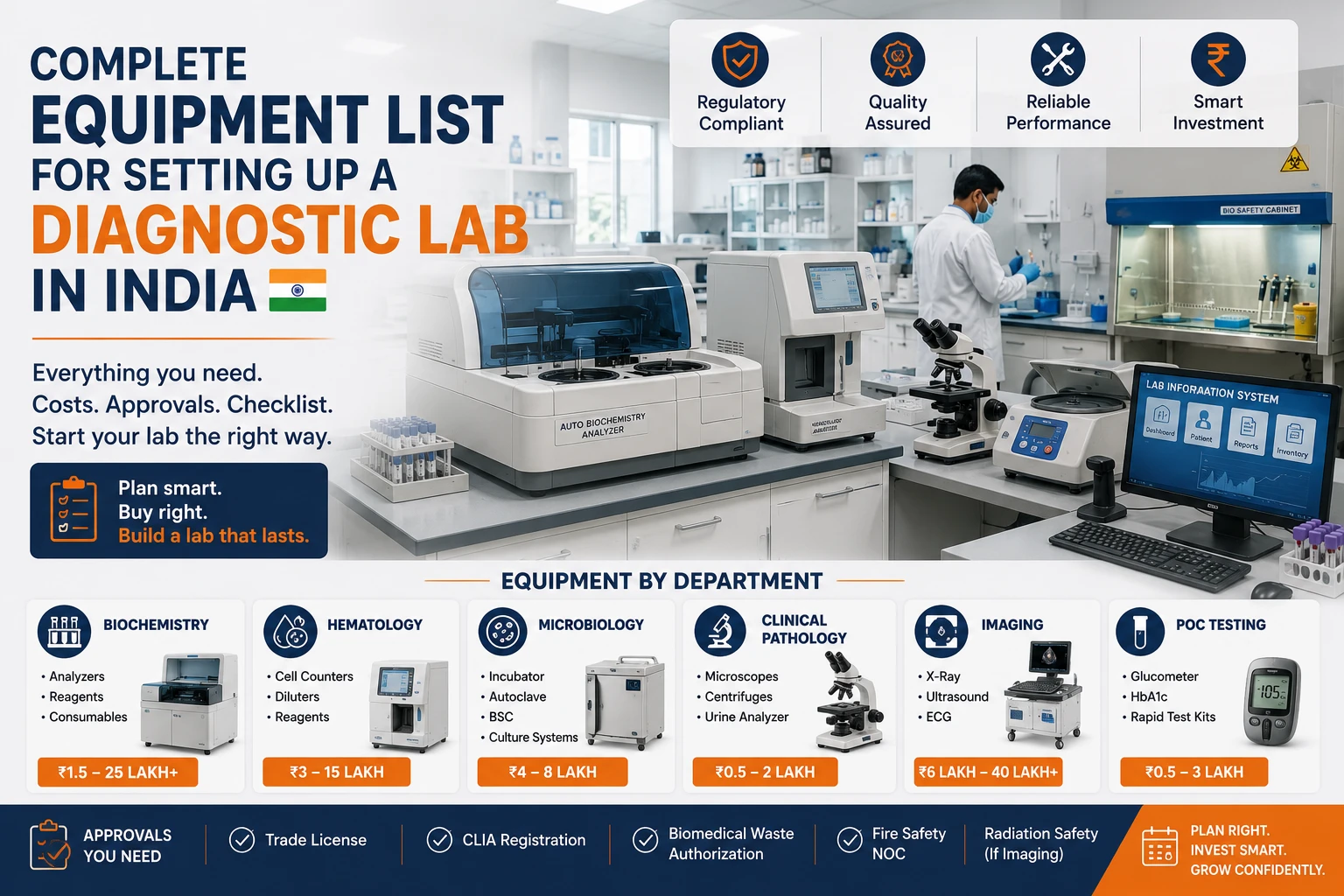
- Compare against our full lab equipment list if you are setting up rather than upgrading, our Diagnostic Lab Equipment List for India is a better starting point than a single-analyzer purchase.
Frequently Asked Questions
Is a 5-part hematology analyzer always better than a 3-part one?
Not necessarily for every facility. A 5-part analyzer gives a more complete automated differential, but a small clinic with low abnormal-flag volume and reliable manual smear-reading support may not need the added cost. The right choice depends on case mix and staffing, not on which analyzer is more advanced.
How much faster is a 5-part analyzer in daily use?
The analyzer itself runs at similar speed per sample regardless of differential type. The real time saving from a 5-part machine comes from needing far fewer manual smears to confirm abnormal differentials, which is where daily turnaround time is actually lost in a 3-part workflow.
Can a 3-part analyzer be upgraded to 5-part later?
No, the differential method is built into the analyzer's hardware, impedance-only versus added optical or cytometry components, so this is not a software upgrade. Buy based on where your lab expects to be in three to five years, not only your current volume.
Do 5-part analyzers need different reagents than 3-part ones?
Yes, generally. The optical or cytometry-based differential in a 5-part analyzer typically requires its own reagent set, which is a factor to include in your running cost comparison, not only the upfront machine price.
Compare verified hematology analyser listings by differential type and throughput. Register on HOSPkart to see actual rates before you order.

Author
Devendra Sharma
Related posts



15-4-2026
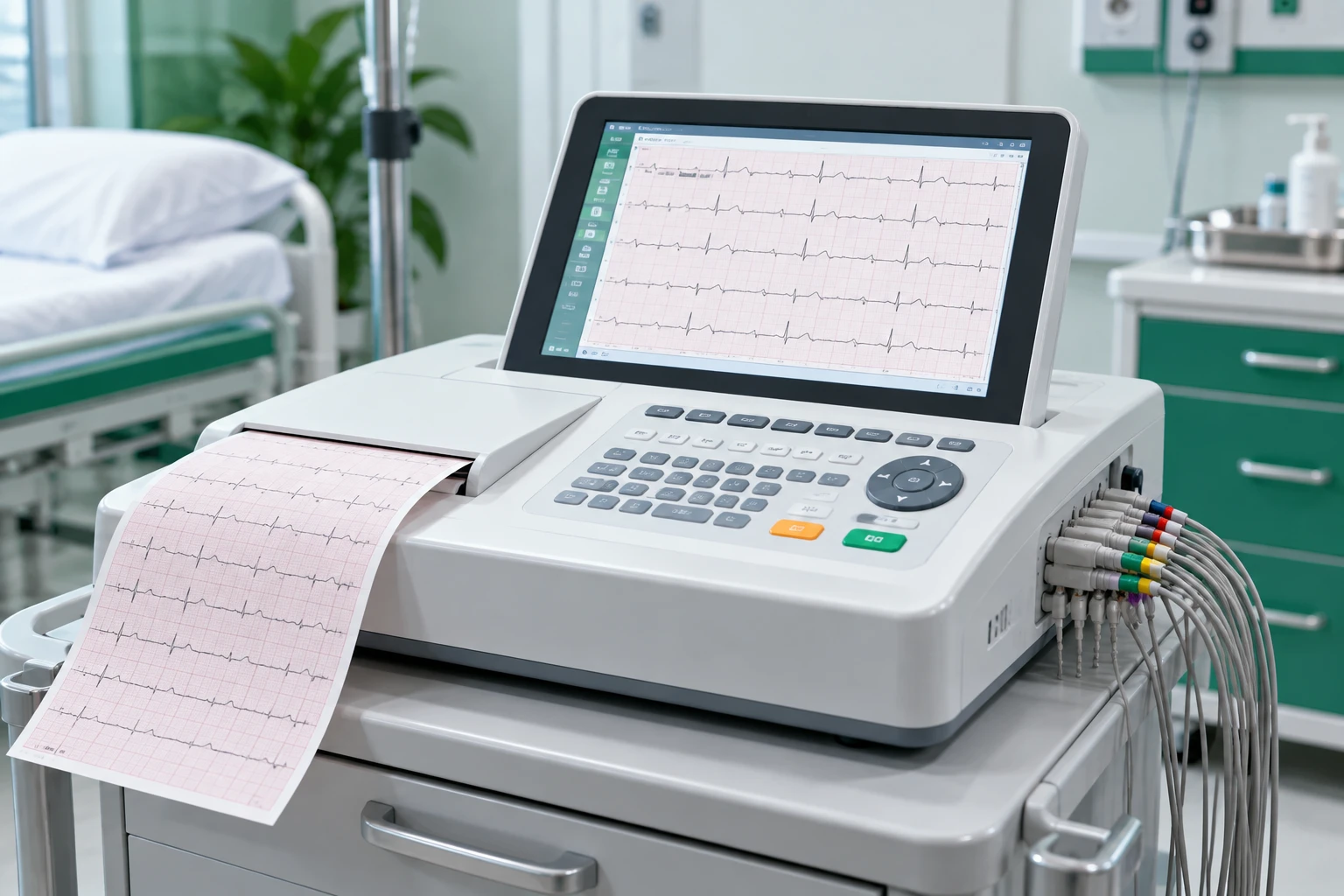
Top 20 Lab Equipment for Diagnostic Labs