 Medical Equipment
 Hospital Furniture
 Medical Disposables
 Rehabilitation
 Diagnostic & Labware
 Eyes & ENT
 Critical Care Equipment
 Urology
 Aesthetic & Dermatology Equipment
 Gastroenterology
 OT Equipment
By Devendra Sharma On 16-09-2026 at 4:45 pm
Baby Warmer Price in India 2026: Buying Guide | HOSPkart
Baby Warmer Price in India (2026): Buying Guide for NICU and Nursery Setup
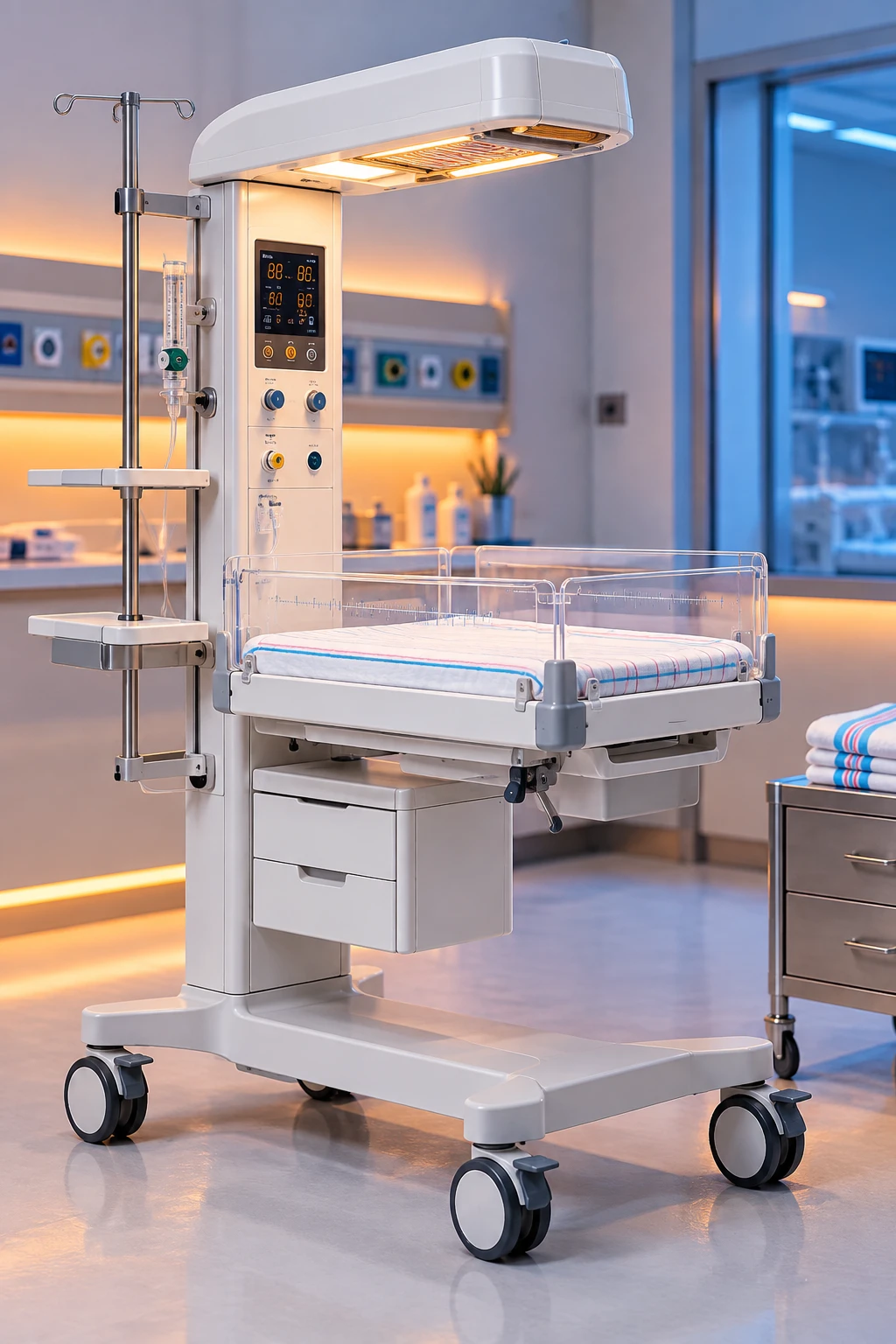
A baby warmer, more precisely an infant radiant warmer, is one of the first equipment decisions any maternity home or NICU expansion has to get right. A newborn cannot regulate body temperature the way an older child or adult can, so this single device is doing continuous, unsupervised clinical work every hour it is switched on. This guide covers what actually changes the price, and what to check before you order.
Key Takeaways
- Infant radiant warmers range from basic fixed units to fully mobile, servo-controlled models with built-in weighing scales and procedure lighting.
- Servo control, where the warmer adjusts heat output automatically based on the baby's skin temperature, is the single biggest factor separating basic and advanced models.
- A warmer bought for a labour room needs different features than one bought for an NICU bay, buying the wrong tier for the setting is a common and costly mistake.
- Verify CDSCO registration and confirm local service support before ordering, a warmer that cannot be serviced quickly is not a device you can leave a newborn under.
What an Infant Radiant Warmer Actually Does
A radiant warmer uses an overhead heating element to keep a newborn's body temperature stable immediately after birth, during resuscitation, or through the early days of NICU or nursery care, without wrapping the baby in a way that blocks clinical access. It is not an incubator, an incubator encloses the baby in a climate-controlled chamber, while a warmer keeps the baby open and accessible for procedures, monitoring and handling.
The Two Control Types, and Why This Is the Real Price Driver
Manual control warmers
The heating element runs at a fixed or manually set output, which a nurse checks and adjusts periodically against a separate thermometer reading. Lower cost, but temperature accuracy depends entirely on how often staff are able to check and adjust it.
Servo control warmers
A skin temperature probe taped to the baby feeds back to the unit continuously, and the heater automatically adjusts output to hold a set target temperature. This is a genuine safety feature, not a convenience one, since it protects against both under-warming and overheating without needing constant manual checks. Most hospital-grade and NICU-grade warmers on the market today are servo-controlled, and this is usually where the biggest jump in price sits.
What Else Changes the Price
Beyond control type, a few other features commonly separate basic and premium models:
- Built-in weighing scale: lets staff weigh the baby without moving them out from under the heat source, a meaningful advantage in the first hours after birth.
- Procedure lighting and oxygen/suction fittings: relevant for warmers used as a resuscitation station in a labour room or delivery OT, less critical for a nursery-only unit.
- Mobility: trolley-mounted, height-adjustable models cost more than fixed units but matter in a labour room where the warmer moves between delivery beds.
- Alarm systems: probe-disconnect and over-temperature alarms are a standard safety feature on mid-range and premium models, and worth confirming rather than assuming.
- Mattress tilt (Trendelenburg position): useful for specific resuscitation procedures, typically found on higher-tier models.
Which Tier Fits Which Setting
| Setting | Recommended tier | Why |
|---|---|---|
| Labour room / delivery resuscitation | Servo-controlled, mobile, with procedure lighting | Needs to move between beds and support immediate resuscitation, not just ongoing warming |
| General nursery | Servo-controlled, fixed or semi-mobile | Continuous stable warming for otherwise healthy newborns |
| NICU | Servo-controlled with full alarm suite and weighing scale | Highest-risk babies, staff need continuous, reliable temperature data without manual checks |
| Small maternity home, low delivery volume | Manual or entry-level servo | Balances safety with a realistic budget for lower patient volume, provided staff can check temperature frequently |
If you are planning a full labour room or NICU setup rather than a single warmer purchase, our Labour Room Equipment List and ICU Setup Equipment Checklist are better starting points than this guide alone.
What to Verify Before You Order
- Confirm CDSCO registration, an infant warmer is a device where a missing or unclear compliance record should stop the purchase, not just prompt a follow-up question.
- Ask specifically whether the model is servo-controlled, some listings use "automatic" loosely, get the actual control mechanism confirmed in writing.
- Check probe and accessory availability, a servo warmer with a hard-to-replace temperature probe becomes a manual warmer the day that probe fails.
- Confirm local service response time, particularly for hospitals outside Jaipur or Kota. Our district-wise guide to medical equipment suppliers in Rajasthan covers what to check when ordering outside a major city.
- Compare landed cost, not sticker price, factor in the probe, mattress and any optional lighting or scale attachments before comparing two quotes.
Frequently Asked Questions
What is the difference between a baby warmer and an incubator?
A warmer keeps the baby open and accessible under radiant heat, suited to labour rooms, resuscitation and general nursery care. An incubator fully encloses the baby in a controlled chamber, typically used for premature or very low birth weight infants who need a more controlled microenvironment. They are not interchangeable purchases.
Is a servo-controlled warmer worth the extra cost over a manual one?
For any facility running continuous nursery or NICU care, yes, the automatic temperature feedback reduces the risk of both under-warming and overheating without needing constant manual monitoring. For a very low-delivery-volume setup with attentive staff always present, a manual unit can still be used safely with frequent checks.
Does a labour room warmer need different features than an NICU warmer?
Yes. A labour room warmer benefits most from mobility and procedure lighting for immediate resuscitation, while an NICU warmer benefits more from a full alarm suite, a built-in scale and stable, continuous servo control for babies who may stay under it for extended periods.
How often should the temperature probe be replaced on a servo-controlled warmer?
This varies by manufacturer and usage volume, check the specific service manual for your model, and confirm probe availability and typical replacement intervals with the seller before you order, since this is a recurring cost most buyers do not budget for upfront.
Compare verified infant warmer listings by control type and feature tier. Register on HOSPkart to see actual rates before you order.

Author
Devendra Sharma
Related posts



15-4-2026
Top 20 Lab Equipment for Diagnostic Labs