 Medical Equipment
 Hospital Furniture
 Medical Disposables
 Rehabilitation
 Diagnostic & Labware
 Eyes & ENT
 Critical Care Equipment
 Urology
 Aesthetic & Dermatology Equipment
 Gastroenterology
 OT Equipment
By Devendra Sharma On 13-10-2026 at 4:00 pm
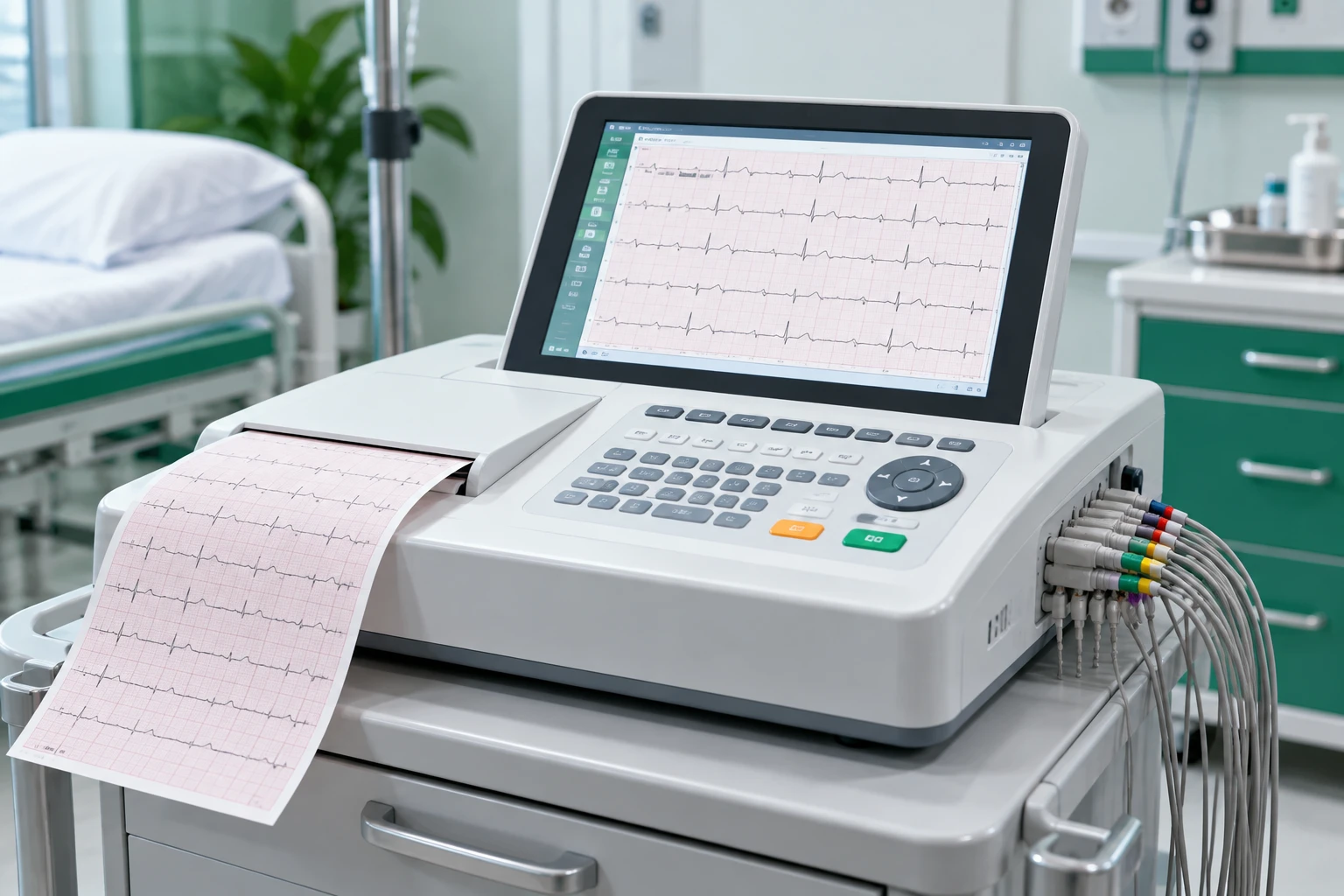
ECG Machine Price in India (2026): 3, 6 and 12 Channel Compared
Channel count tells you how many of the standard 12 ECG leads a machine can record and display simultaneously, not the overall diagnostic quality of the device on its own, and a 12 channel machine that records a complete tracing in one pass is now the practical clinical standard for any setting handling cardiac emergencies or regular diagnostic ECGs. This guide breaks down what 3, 6 and 12 channel actually mean for your purchase, what else drives price beyond channel count, and which machine fits which setting in your hospital.
Key Takeaways
- Channel count refers to how many ECG leads the machine records and displays simultaneously, not overall diagnostic quality on its own.
- A 12 channel machine records a complete standard ECG in one pass; fewer-channel machines require sequential recording to build the same full picture, which takes longer and is more sensitive to patient movement.
- For any setting handling cardiac emergencies or regular diagnostic ECGs, a 12 channel machine is now the practical standard, not a premium upgrade reserved for specialist departments.
- Printer type, paper cost and connectivity are the specifications that most affect running cost after the initial purchase, often exceeding the device's own price difference over its working life.
What Channel Count Actually Means
An ECG machine's channel count refers to how many of the standard 12 ECG leads it can record and display at the same time. This single specification is the headline number in nearly every ECG machine listing, which is exactly why it gets treated as the primary comparison point, sometimes at the expense of other specifications that matter just as much for a hospital bulk order.
3 channel machines
Records three leads simultaneously and cycles through the remaining leads in sequence to build a complete 12-lead tracing. This takes longer per patient and is more sensitive to patient movement during the recording, since different leads are captured at slightly different moments rather than all at once, which can introduce subtle inconsistencies into the final composite tracing if the patient shifts position partway through.
6 channel machines
A middle ground, recording six leads at once and requiring fewer sequential cycles to complete a full 12-lead ECG than a 3 channel machine needs. Faster than a 3 channel machine, though still not simultaneous across all leads, which means some of the same movement-sensitivity consideration applies, just to a lesser degree.
12 channel machines
Records all 12 standard leads simultaneously in one pass, producing a single synchronised tracing with no risk of the rhythm shifting between lead groups during capture. This is faster, more consistent, and the clinical standard for any setting doing moderate to high ECG volume or handling cardiac emergencies, where the reliability of a single synchronised capture genuinely matters for diagnostic confidence.
Why This Matters Beyond Speed
A sequential 3 or 6 channel recording assumes the patient's heart rhythm stays consistent across the recording cycles needed to complete the full 12-lead picture. For a routine screening ECG on a stable, resting patient, this assumption usually holds and the result is clinically adequate. For a patient with an irregular rhythm, or in an emergency setting where rhythm instability is precisely what you are trying to assess, a simultaneous 12 channel recording gives a genuinely more reliable diagnostic picture, which is exactly why emergency departments and cardiology-adjacent settings have moved toward 12 channel as standard rather than treating it as a premium option reserved for specialist use.
What Else Drives the Price
- Printer type: thermal printers are now standard and reduce ongoing paper cost compared to older ink-based systems; confirm paper roll cost and availability for the specific model, since this recurring cost compounds meaningfully at higher ECG volumes over a device's working life.
- Interpretation software: some machines include automated interpretation algorithms, useful as a secondary check but not a replacement for clinical reading, and this software licence adds to the device's price, sometimes with an ongoing subscription or update cost worth asking about upfront.
- Connectivity and data storage: integration with a hospital record system or PACS-like storage adds cost but saves manual filing time at higher patient volumes, and is worth evaluating against your facility's actual digital records infrastructure rather than purchasing as a standalone feature.
- Battery backup: relevant for machines used at bedside or in settings with inconsistent power supply, a genuine reliability factor rather than a convenience feature, since a machine that loses power mid-recording in a ward with frequent outages is a real operational problem, not a theoretical one.
- Display size and tracing review: a larger display that lets staff review the tracing before printing can reduce wasted paper from repeat recordings, a small but real recurring saving that compounds at scale.
Which Machine Fits Which Setting
| Setting | Recommended channel count | Why |
|---|---|---|
| Small clinic, occasional screening ECGs | 3 channel | Lower cost, adequate for infrequent, non-urgent screening where speed and simultaneous capture matter less |
| Moderate volume OPD or diagnostic centre | 6 or 12 channel | Faster turnaround matters as patient volume increases and per-patient time becomes a throughput constraint |
| Emergency department | 12 channel | Simultaneous recording gives a more reliable picture during acute presentations where rhythm instability is common |
| Cardiology-adjacent or ICU | 12 channel | Clinical standard for this acuity level, where diagnostic confidence in the tracing directly affects treatment decisions |
Total Cost of Ownership: Paper, Software and Connectivity Over Time
Buyers comparing ECG machines primarily on the upfront device price often miss that paper cost, software licensing, and any connectivity subscription fees can meaningfully exceed the initial price gap between models over a few years of regular use. A facility running moderate to high ECG volume should ask any seller for an estimated per-recording paper cost based on actual roll pricing, not a vague assurance that running costs are "low," and should clarify whether interpretation software or connectivity features carry any ongoing subscription cost beyond the initial purchase. This comparison, done properly at the point of purchase, often changes which specific model looks like the better value once the full multi-year cost is accounted for, rather than just the sticker price on day one.
Lead Placement and Common Sources of a Poor-Quality Tracing
Even the best-specified ECG machine produces an unreliable tracing if lead placement is inconsistent, which is a training and process issue rather than a device specification, but it is worth mentioning here because it directly affects whether a facility actually gets the diagnostic value a higher channel count is meant to provide. Common sources of tracing artifacts include poor electrode contact from inadequate skin preparation, patient movement or muscle tension during recording, and electrical interference from nearby equipment. A 12 channel machine's simultaneous capture reduces one specific source of inconsistency, rhythm variation across sequential lead groups, but it does not eliminate these other sources, which is why staff training on proper technique remains just as important after upgrading to a higher channel count device as it was before.
Portable vs Trolley-Mounted ECG Machines
Beyond channel count, ECG machines also vary in physical format, which matters for how they actually get used day to day. A portable, lightweight unit is easier to move between wards or use at bedside, which suits a facility without a dedicated ECG room or one that needs to perform recordings across multiple departments. A trolley-mounted unit with a larger display and integrated printer is often preferred for a dedicated diagnostic centre or cardiology department doing high consistent volume in one location, where portability matters less than display size and workflow efficiency at a fixed station. Neither format is inherently better, the right choice depends on your facility's actual workflow pattern rather than the channel count decision alone.
What to Check Before You Buy
- Confirm channel count matches your actual patient volume and acuity, not just your budget, since under-specifying for a department handling genuine cardiac emergencies carries real clinical risk.
- Ask for the printer type and paper roll cost, this is a recurring expense that compounds at higher ECG volumes and deserves the same scrutiny as the device price itself.
- Check CDSCO registration status for the specific model before ordering in bulk, since compliance documentation should be confirmed model by model, not assumed from a general manufacturer statement.
- Confirm battery backup availability if the machine will be used at bedside or in a setting with inconsistent power, since this is a genuine reliability factor rather than an optional extra.
- Ask about any software or connectivity subscription costs before comparing final prices, since these recurring costs can shift which model is actually the better value over the device's working life.
- Compare against our wider patient monitoring guide if you are evaluating ECG as part of a broader monitoring setup, our Patient Monitor Types guide covers where standalone ECG fits versus integrated monitoring in a critical care bay.
Frequently Asked Questions
Is a 12 channel ECG machine always necessary?
Not for every setting. A small clinic doing occasional routine screening can reasonably use a 3 or 6 channel machine without compromising care quality for that specific use case. Any setting handling cardiac emergencies or higher diagnostic volume benefits from the simultaneous, more reliable recording a 12 channel machine provides, and should treat that as the baseline expectation rather than an upgrade.
Does a higher channel count mean a more accurate diagnosis?
Channel count affects how the 12-lead data is captured, simultaneously versus sequentially, not the underlying diagnostic accuracy of a correctly performed ECG reading by a trained clinician. A 12 channel machine reduces the risk of rhythm inconsistency across a sequential recording, which matters most in unstable or emergency patients where that inconsistency could meaningfully affect interpretation.
How much does ECG paper cost add up over time?
This varies by printer type and patient volume, but it is a genuine recurring cost worth comparing across models before purchase, not an afterthought to check once the machine is already in use and the paper cost has become a fixed, unavoidable line item in your supply budget.
Can a 3 channel ECG machine be upgraded to 12 channel later?
No, channel count is a hardware specification built into the machine, not a software upgrade that can be applied after purchase. Buy based on your expected patient volume and acuity over the next several years, not only your current needs, since this decision cannot be reversed without a full new purchase.
Is automated interpretation software worth paying extra for?
It is useful as a secondary check that can flag findings for clinician review, but it is not a substitute for clinical interpretation and should not be the deciding factor in your purchase unless your facility has a specific workflow reason to rely on it, such as a high-volume screening programme where a first-pass automated flag genuinely saves clinician time.
Do all 12 channel ECG machines cost roughly the same?
No, price varies considerably based on printer type, interpretation software inclusion, connectivity features, display quality and battery backup, even among machines that share the same core 12 channel specification. Comparing on channel count alone, without factoring in these other specifications, can lead to comparing devices that are not actually equivalent.
Is a portable or trolley-mounted ECG machine better for a general hospital?
It depends on your workflow. A portable unit suits a facility performing ECGs across multiple wards or at bedside, while a trolley-mounted unit with a larger display suits a dedicated diagnostic centre or cardiology department doing consistent high volume in one fixed location.
Compare verified ECG machine listings by channel count and features. Register on HOSPkart to see actual rates before you order.

Author
Devendra Sharma
Related posts




15-4-2026
Top 20 Lab Equipment for Diagnostic Labs