 Medical Equipment
 Hospital Furniture
 Medical Disposables
 Rehabilitation
 Diagnostic & Labware
 Eyes & ENT
 Critical Care Equipment
 Urology
 Aesthetic & Dermatology Equipment
 Gastroenterology
 OT Equipment
By Devendra Sharma On 17-09-2026 at 5:17 pm
Digital BP Machine Price in India 2026 | HOSPkart
Digital BP Machine Price in India (2026): Buying Guide for Hospitals and Clinics
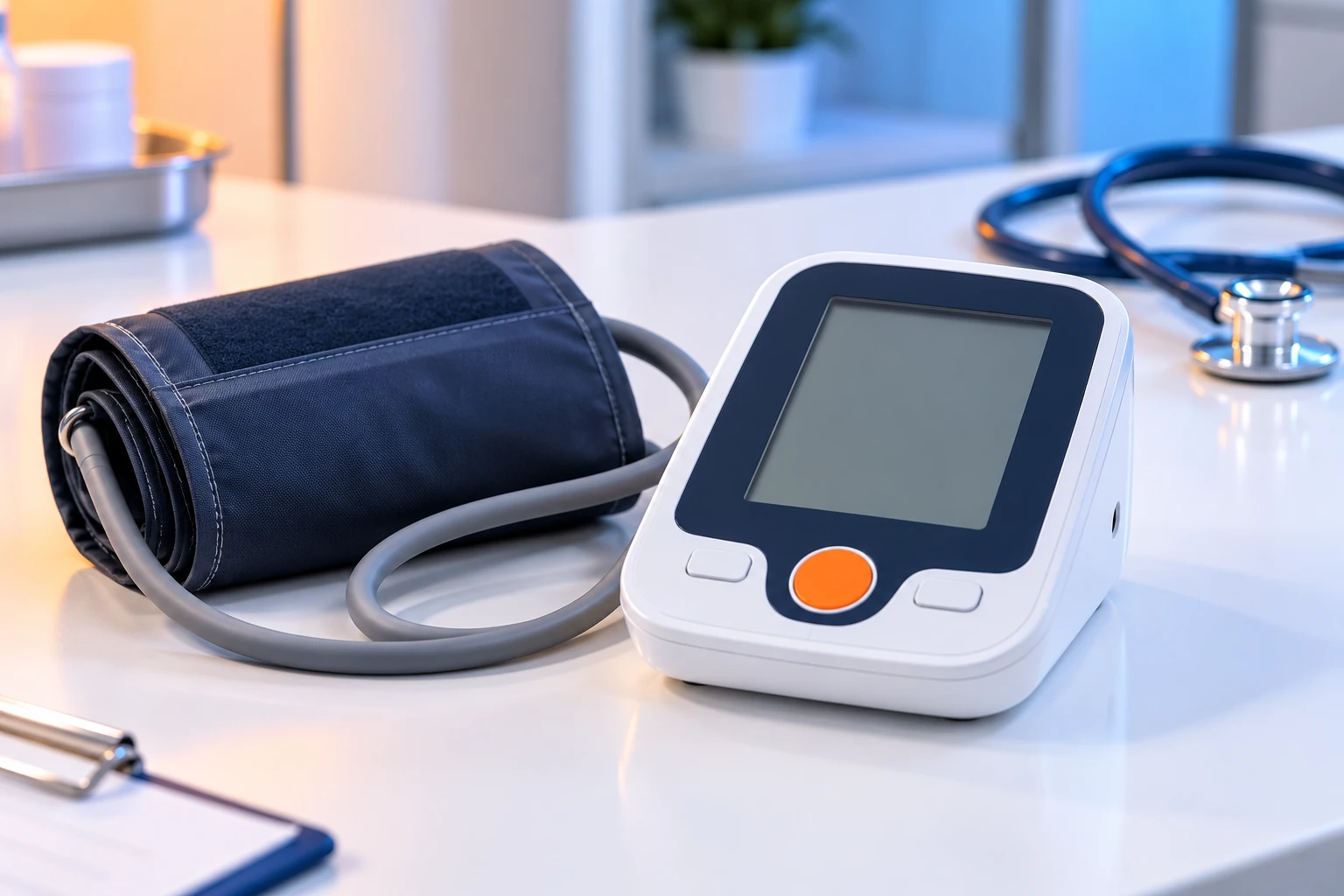
A blood pressure machine is on nearly every desk and trolley in a hospital, OPD reception, general ward, ICU, ambulance, and yet it is one of the least researched purchases most facilities make. This guide covers what actually separates a basic digital BP machine from a hospital-grade one, and what changes the price.
Key Takeaways
- Digital BP machines range from simple arm-cuff models for OPD screening to hospital-grade units built for repeated daily use and continuous ward monitoring.
- Cuff size range, validation standard and durability under repeated use matter more to a bulk hospital buyer than the display features most consumer listings highlight.
- Digital blood pressure monitors are commonly classified under India's Medical Device Rules, 2017; confirm the specific classification and CDSCO registration status with your seller before ordering in bulk.
- Buying the wrong tier for the setting, a consumer-grade unit for continuous ward use, is a common and avoidable cost mistake.
Manual, Digital and Integrated: The Three Types Hospitals Actually Buy
Manual (aneroid) sphygmomanometers
The dial-and-stethoscope type most clinicians trained on. Lower cost, no battery dependency, but accuracy depends on the operator's technique and hearing, which is exactly why hospitals increasingly pair or replace them with digital units for routine, repeated readings.
Standalone digital BP machines
Automatic or semi-automatic arm-cuff units that inflate, measure and display a reading without a stethoscope. This is the category most hospitals are buying in bulk for OPD reception, general wards and take-home patient monitoring, and it is also the category with the widest price range in the market.
Integrated into a multi-parameter monitor
Rather than a standalone device, blood pressure measurement built into an ICU or ward patient monitor alongside SpO2, ECG and other parameters. This is the right category for continuous critical care monitoring rather than a separate BP machine purchase; our Patient Monitor Types guide covers how to choose between the two.
What Actually Moves the Price on a Standalone Digital BP Machine
Buyers often compare digital BP machines on display size or brand name alone. The specifications that actually matter for a bulk hospital order are different:
- Cuff size range: a hospital serving a genuinely mixed patient population needs a cuff range validated for both smaller and larger arm circumferences, not a single standard cuff. Paediatric and bariatric cuffs are usually priced as separate accessories.
- Clinical validation: look for a device validated against a recognised clinical accuracy protocol, not just a manufacturer's internal accuracy claim.
- Duty cycle and durability: a device used dozens of times a day at an OPD reception needs a sturdier pump mechanism than one used a handful of times a day in a small clinic, and this is reflected in price.
- Power source: mains-powered or rechargeable units suit high-frequency ward use better than battery-only models, which is a real running-cost factor for bulk buyers, not just a convenience feature.
- Memory and connectivity: data storage or connectivity to a hospital record system adds cost and is more relevant for wards tracking trends over a patient's stay than for a single-reading OPD desk.
CDSCO Classification: What to Confirm Before You Order
Non-invasive blood pressure monitoring devices are commonly classified under India's Medical Device Rules, 2017 at a moderate risk tier. Classification can vary by specific device design and intended use, so rather than assuming a class, ask your seller directly for the CDSCO registration status and classification of the exact model you are ordering, and get it confirmed in writing before placing a bulk order. If a seller cannot answer this clearly, treat that as a reason to keep comparing rather than a technicality to skip past.
Which Type Fits Which Setting
| Setting | Recommended type | Why |
|---|---|---|
| OPD reception / screening | Standalone digital, standard cuff range | High volume, quick readings, low cost per unit matters most |
| General ward | Standalone digital, wider cuff range | Mixed patient sizes and repeated daily use across shifts |
| ICU / HDU | Integrated into patient monitor | Continuous monitoring alongside other vitals is the clinical requirement |
| Ambulance | Standalone digital, durable, battery-powered | Needs to withstand movement and function without mains power |
| Home monitoring recommendation for discharged patients | Consumer-grade standalone digital | Lower cost is appropriate outside a clinical repeated-use setting |
Buying in Bulk: What to Check Before You Order
- Confirm the validated cuff size range, and order paediatric or bariatric cuffs separately if your patient mix needs them.
- Ask for the CDSCO registration and classification of the specific model, not a general compliance statement.
- Check duty cycle suitability for your setting, a device rated for occasional home use will wear out faster under all-day OPD use.
- Compare landed cost across sellers, including any cuff or accessory add-ons, rather than the base unit price alone.
- Confirm local service support, particularly if ordering for a facility outside Jaipur or Kota. Our district-wise guide to medical equipment suppliers in Rajasthan covers what to check when ordering outside a major city.
Frequently Asked Questions
Are digital BP machines as accurate as manual sphygmomanometers?
A properly validated digital BP machine, used with the correct cuff size, is generally reliable for routine clinical use. Accuracy issues in practice usually come from an incorrect cuff size or an unvalidated device, not from the digital measurement method itself.
How often should a hospital-grade digital BP machine be recalibrated?
This varies by manufacturer and usage volume. Check the specific service manual for your model, and build a recalibration schedule into your equipment maintenance plan rather than waiting for a reading to look questionable.
Do I need different BP machines for adults and children?
You need different cuffs, not necessarily different machines. Confirm the validated cuff size range for any model you are considering, and order the correct paediatric or larger adult cuffs to match your actual patient population.
Is it cheaper to buy BP machines integrated into a patient monitor or as standalone units?
Standalone BP machines are generally the lower-cost option for settings that only need periodic BP readings. Integrated multi-parameter monitors cost more but are the right choice where continuous monitoring alongside other vitals is a genuine clinical requirement, such as an ICU.
Compare verified digital BP machine listings by cuff range and validation. Register on HOSPkart to see actual rates before you order in bulk.

Author
Devendra Sharma
Related posts



15-4-2026
Top 20 Lab Equipment for Diagnostic Labs