 Medical Equipment
 Hospital Furniture
 Medical Disposables
 Rehabilitation
 Diagnostic & Labware
 Eyes & ENT
 Critical Care Equipment
 Urology
 Aesthetic & Dermatology Equipment
 Gastroenterology
 OT Equipment
By Devendra Sharma On 01-09-2026 at 3:02 pm
Biochemistry Analyzer Guide: Applications & Buying Tips
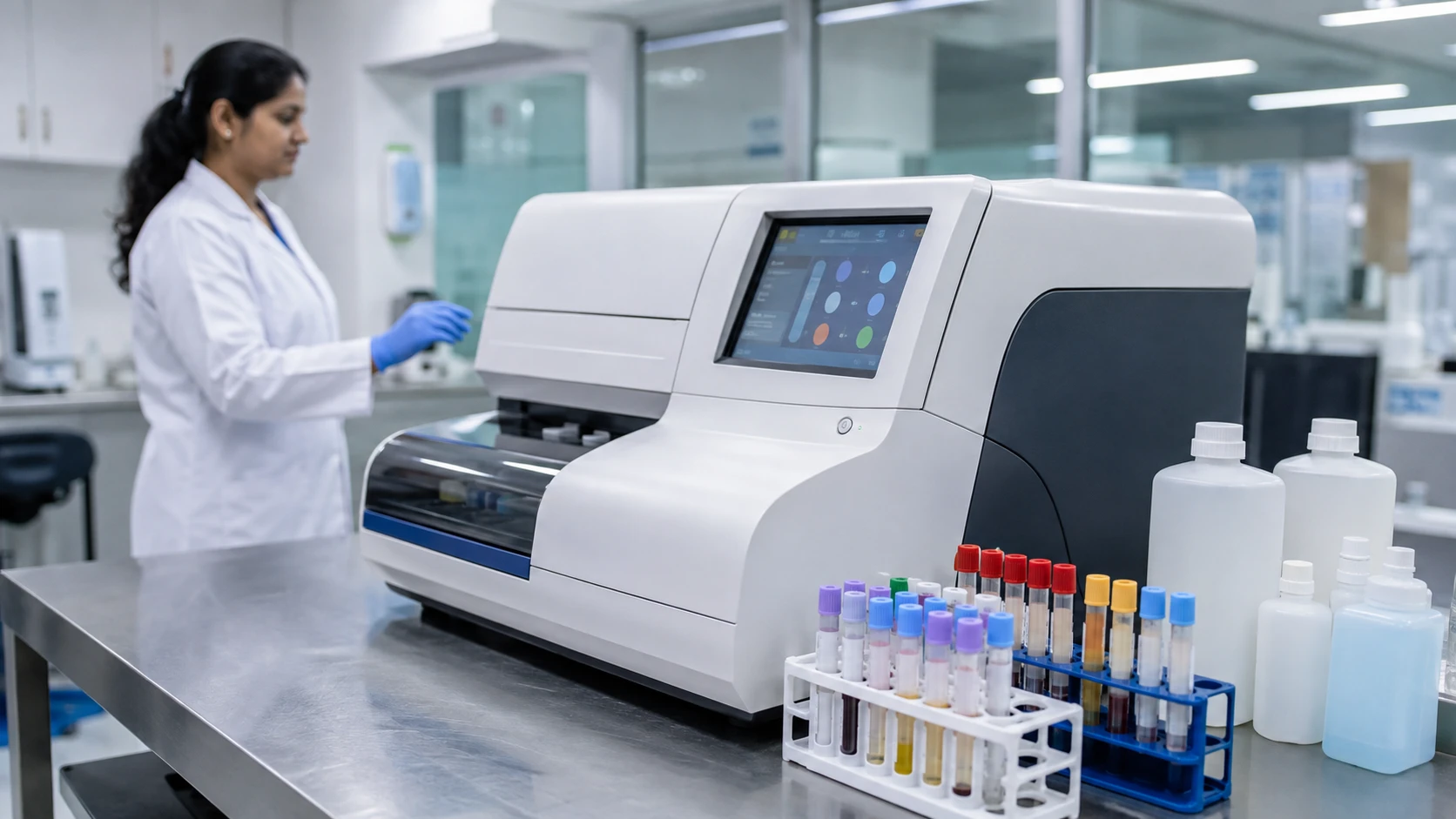
If you are setting up or upgrading a diagnostic lab, the biochemistry analyzer is one of the most important purchases you will make. It is the workhorse instrument that runs the bulk of routine blood chemistry tests every day, from glucose and lipid profiles to liver and kidney function panels. This biochemistry analyzer guide walks procurement teams through what the machine actually does, how to choose between semi-automatic and fully-automatic models, and what to check before signing a purchase order.
Whether you run a small clinic, a nursing home, or a busy hospital pathology department, getting this decision right affects your daily testing capacity, staffing needs, and long-term running costs. Let's break it down.
What Does a Biochemistry Analyzer Do?
A biochemistry analyzer measures the concentration of specific chemical components in blood serum, plasma, urine, or other body fluids. It does this by mixing a small sample with reagents and measuring the resulting color change or reaction using photometry.
Common tests run on a biochemistry analyzer include:
Blood glucose (fasting, random, post-prandial)
Lipid profile (cholesterol, triglycerides, HDL, LDL)
Liver function tests (SGOT, SGPT, bilirubin, alkaline phosphatase)
Kidney function tests (urea, creatinine, uric acid)
Electrolytes (sodium, potassium, chloride, calcium)
Total protein and albumin
These tests form the backbone of routine diagnostics, which is why every diagnostic lab, hospital pathology department, and even mid-sized clinic eventually needs reliable access to a clinical chemistry analyzer for hospitals or standalone labs.
Semi-Automatic vs Fully-Automatic Biochemistry Analyzers
One of the first decisions in this biochemistry analyzer guide is choosing between semi-automatic and fully-automatic systems. The right choice depends on your daily sample volume, staffing, and budget.
Semi-Automatic Analyzers
A semi-automatic biochemistry analyzer requires a technician to manually pipette the sample and reagent into a cuvette before the machine reads the result. It is simpler, more affordable, and easier to maintain.
This makes it a practical fit for:
Small to mid-sized clinics with limited daily test volume
Diagnostic centers just starting out
Labs where trained staff have time for manual sample handling
Facilities working with a tighter budget
Fully-Automatic Analyzers
A fully-automatic biochemistry analyzer handles sample loading, dilution, mixing, reading, and result calculation with minimal manual intervention. It processes far more samples per hour and reduces the chance of human error in pipetting.
This suits:
Busy hospital labs with high daily patient footfall
Diagnostic chains processing samples in bulk
Facilities that need faster turnaround times
Labs looking to reduce dependency on manual technician time
The semi auto vs fully auto biochemistry analyzer decision essentially comes down to volume versus cost. A semi-automatic unit costs less upfront and needs less specialized upkeep, while a fully-automatic system costs more but pays off in throughput and consistency once your test volumes justify it. If you are only running a few dozen tests a day, a fully-automatic analyzer may sit underused; if you are running hundreds, a semi-automatic one will bottleneck your lab and frustrate your staff.
Key Buying Considerations
Beyond the semi versus fully automatic choice, a few practical factors decide whether a biochemistry analyzer for diagnostic lab use actually works well for your facility long-term.
Test menu and reagent compatibility. Confirm the analyzer supports the specific panel of tests your lab regularly runs, and check whether it is locked to a single reagent brand or works with open-system reagents. Open systems generally give you more flexibility and better pricing over time.
Throughput (samples per hour). Match the machine's rated throughput to your actual daily patient volume, not just your current one. A lab that is growing should buy slightly ahead of current need.
Ease of maintenance. Ask about daily cleaning requirements, calibration frequency, and how much technician time upkeep demands. A machine that is difficult to maintain will eat into your lab's productivity regardless of its specifications.
After-sales service and reagent availability. An analyzer is only as good as the support behind it. Confirm response times for service visits, availability of spare parts, and whether reagents are readily stocked in your region.
GST-verified sourcing and documentation. Buying through GST-verified sellers ensures proper invoicing and smoother compliance for your facility's accounts. Note that under the GST 2.0 reform effective 22 September 2025, many diagnostic and lab devices saw rate changes; it's worth confirming current rates with the GST portal or your tax advisor before finalizing your budget.
Warranty coverage. Look for manufacturer or OEM warranty terms that clearly spell out what is covered, for how long, and what the process is for claims.
Understanding Biochemistry Analyzer Price
Biochemistry analyzer price varies widely based on automation level, test throughput, brand, and included accessories. Semi-automatic models are generally positioned at the lower end of the price range, while fully-automatic analyzers with higher throughput and advanced software sit higher. Rather than chasing the lowest number, procurement teams are better served comparing total cost of ownership: purchase price, reagent costs, maintenance, and warranty coverage together, since these determine what the machine actually costs your lab over its working life.
Because pricing can shift based on configuration and current market conditions, it is best to request updated quotes directly from GST-verified sellers rather than relying on outdated figures.
Fitting It Into Your Broader Lab Setup
A biochemistry analyzer rarely works in isolation. Most diagnostic workflows require sample preparation before testing, which is where equipment like lab centrifuges comes in, separating serum or plasma from whole blood before it reaches the analyzer. When planning your lab setup or expansion, budget for the full workflow, not just the analyzer itself, so your equipment works together without creating bottlenecks at any single station.
If you are comparing options, browsing a dedicated clinical chemistry analyzer category lets you see available models side by side from certified manufacturers and GST-verified sellers, which makes it easier to match specifications to your lab's actual needs.
Final Thoughts
Choosing the right biochemistry analyzer comes down to being honest about your lab's daily volume, staffing capacity, and budget, then matching those realities to the right level of automation. This biochemistry analyzer guide is meant to help hospital and diagnostic lab procurement teams ask the right questions before they buy: what tests do we need to run, how many samples per day, who will maintain the machine, and who will service it after the sale.
Sourcing through a platform with certified manufacturers, GST-verified sellers, pan-India delivery, and manufacturer or OEM warranty support takes much of the risk out of that decision, so your lab gets equipment it can rely on for years, not just a machine that looks good on a spec sheet.

Author
Devendra Sharma
Related posts

15-4-2026
Top 20 Lab Equipment for Diagnostic Labs