 Medical Equipment
 Hospital Furniture
 Medical Disposables
 Rehabilitation
 Diagnostic & Labware
 Eyes & ENT
 Critical Care Equipment
 Urology
 Aesthetic & Dermatology Equipment
 Gastroenterology
 OT Equipment
By Devendra Sharma On 01-09-2026 at 3:08 pm
Types of Examination Table for OPD & Clinics: Guide
Walk into any OPD or outpatient clinic and the examination table is the one piece of furniture every single patient interacts with, often multiple times a day, across every specialty the clinic offers. Yet it is also one of the most under-planned purchases in clinic setup, frequently bought in a hurry, based on price alone, without much thought to specialty needs or patient volume. Understanding the different types of examination table available, and how each one fits a particular kind of practice, makes the difference between a table that serves your clinic well for a decade and one that gets replaced within two years.
This guide walks through the main categories of examination tables used in OPDs and clinics across India, what to look for in materials and design, and how to think about examination table procurement as part of your broader clinic furniture plan.
Why the Types of Examination Table Matter More Than You Think
Not every clinic needs the same table. A single-doctor general physician's OPD has very different requirements from a gynecology clinic, a pediatric practice, or a multi-specialty diagnostic center. Choosing among the types of examination table available means matching the table's height adjustment, upholstery, and accessories to your actual patient mix, not just picking whatever is cheapest or most commonly stocked.
Getting this wrong has real downstream costs: staff strain from lifting or repositioning patients on a fixed-height table, slower turnaround during high-volume OPD hours, and in specialty practices, an inability to perform certain examinations properly at all. This is why examination table selection deserves the same structured thinking hospitals apply to bigger equipment purchases.
General or Manual Examination Tables
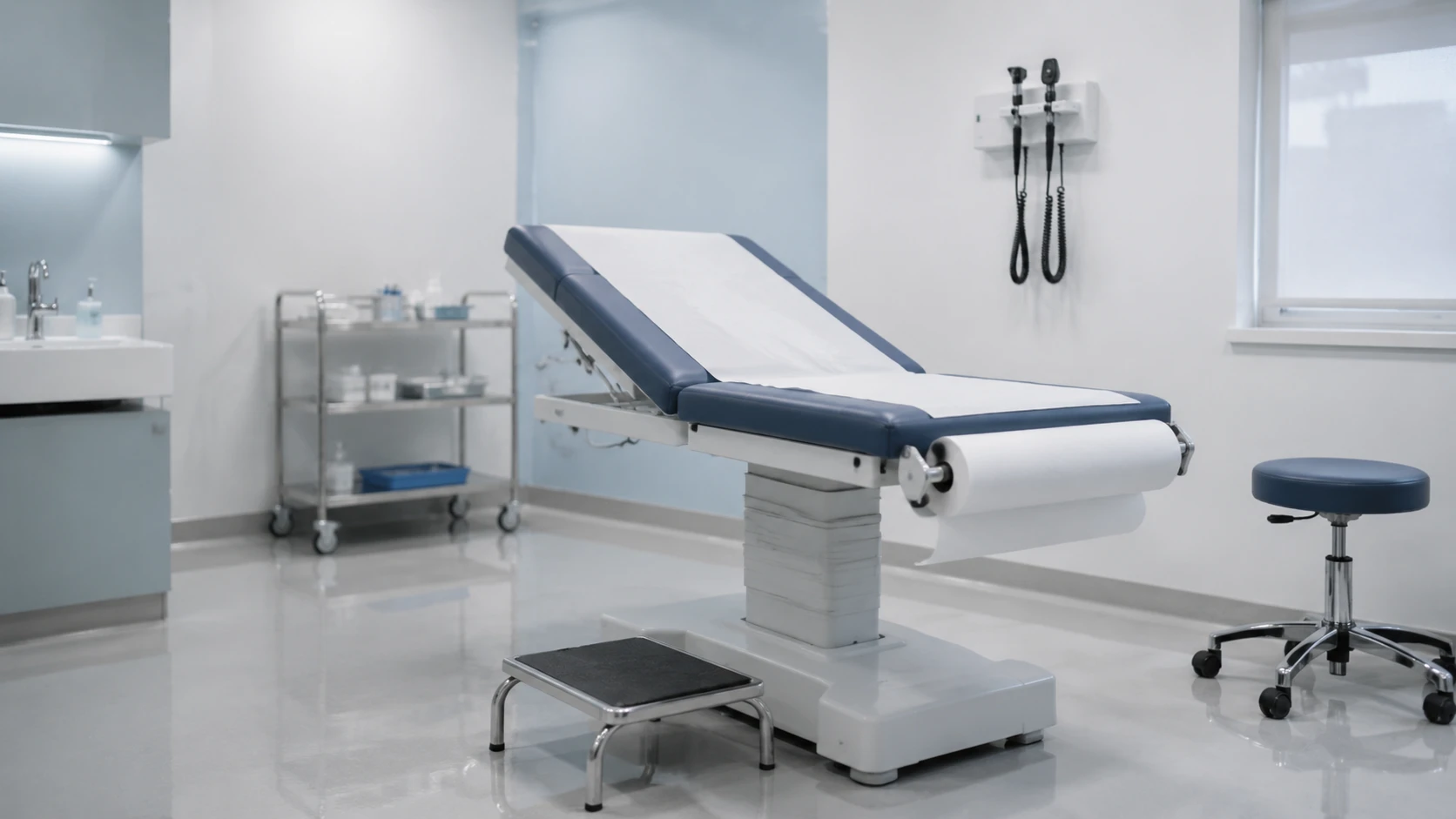
The most common starting point for any clinic is the general, manual examination table. These are typically fixed-height or manually adjustable units with a padded top, sometimes with a backrest that raises using a hand crank or gas-assisted lever.
Manual tables suit clinics where:
Patient volume is moderate and procedures are largely routine consultations
Budget constraints favor a simpler, lower-maintenance design
Staff do not need to reposition the table height frequently through the day
They are durable, easy to maintain, and cost-effective, which makes them a reasonable default for a general physician's OPD, a small family clinic, or a secondary examination room in a larger facility. The tradeoff is patient accessibility. Elderly patients, those with mobility limitations, or anyone needing careful transfer assistance can struggle with a fixed-height surface, and staff end up doing more physical work to compensate.
Hydraulic and Motorized Adjustable-Height Tables
For clinics handling a broader patient mix, a hydraulic or motorized adjustable-height examination table solves the accessibility problem directly. These tables lower to a height that makes it easy for patients to sit or step on, then raise electrically or hydraulically to a comfortable working height for the physician.
This category is particularly valuable for:
OPDs seeing elderly, post-surgical, or mobility-limited patients regularly
Orthopedic, physiotherapy, and general medicine clinics where physical positioning matters
Multi-doctor practices where different physicians prefer different working heights
A motorized OPD examination table also reduces staff injury risk over time, since nurses and attendants are not manually lifting or supporting patients onto a high, fixed surface. The upfront cost is higher than a manual table, but for clinics with meaningful patient volume, the reduction in staff strain and improved patient comfort usually justifies it.
Specialty Examination Tables
Beyond general-purpose tables, several specialties need purpose-built designs, and this is where a one-size-fits-all approach to procurement breaks down.
Gynecology Examination Tables
A gynecology examination table is built specifically for obstetric and gynecological exams, with stirrups (leg supports) that fold out from the base, a section that can be positioned for lithotomy exams, and often a drawer or storage compartment underneath for instruments and disposables. Adjustable stirrup height and angle matter here, since patient comfort during these exams directly affects how smoothly a consultation proceeds. Any OB-GYN clinic, maternity center, or multi-specialty OPD offering gynecology services should treat this as a distinct line item rather than assuming a general table can double up.
Pediatric Examination Tables
Pediatric tables are typically smaller in scale, sit lower to the ground for easier parent-assisted positioning, and often feature rounded edges, bright and calming upholstery, and sometimes a weighing scale integrated into the design. Some include side rails to prevent a young child from rolling off during examination. A pediatric clinic or the pediatric OPD section of a hospital benefits from this dedicated design far more than trying to adapt a general table.
Material and Upholstery Considerations
Regardless of the table type, the surface material determines how well the table holds up to daily clinical use. A few things worth checking before you buy:
Vinyl or PU upholstery that resists tearing and is genuinely easy to wipe down between patients, since infection control depends on quick, thorough cleaning
Seamless or minimal-seam padding that does not trap fluid or debris in stitching lines
Stain and chemical resistance, since disinfectants used between patients can degrade lower-quality upholstery over time
Firm, supportive foam underneath that does not sag or flatten after months of continuous use
A table that looks good on day one but degrades within a year at the seams or upholstery is a false economy, even if the initial price looked attractive.
How to Choose Based on Patient Volume and Specialty
There is no single "best" examination table; the right choice depends on two variables: how many patients you see and what kind of care you provide.
Low-to-moderate volume, general practice: a manual or basic hydraulic table is usually sufficient
High-volume OPD with diverse patient ages and mobility levels: motorized adjustable-height tables reduce staff strain and speed up patient turnover
Specialty practices (gynecology, pediatrics, orthopedics): purpose-built tables are not optional extras, they are functionally necessary
Multi-specialty clinics: plan for a mix, general tables for standard consultation rooms and specialty tables where specific departments need them
Browsing a full range of examination tables before finalizing your OPD layout makes it easier to compare these categories side by side rather than settling for whatever a single local vendor happens to stock.
Fitting Examination Tables Into Your Overall Clinic Furniture Plan
An examination table for clinic use rarely gets purchased in isolation. It sits alongside instrument trolleys, patient stools, storage cabinets, screens or curtains for privacy, and waiting area seating, all of which need to work together functionally and visually. Treating examination table procurement as part of a broader hospital furniture plan, rather than a standalone purchase, helps avoid mismatched heights, inconsistent finishes, and last-minute gaps when a new consultation room opens.
For clinics scaling up or opening additional OPD rooms, standardizing on a consistent set of table types and finishes across rooms also simplifies maintenance and future replacement, since staff already know how each model operates and spare parts or upholstery repairs are easier to source when equipment is not scattered across a dozen different brands.
Sourcing Reliable Examination Tables
Once you know which types of examination table your clinic needs, sourcing from certified manufacturers and GST-verified sellers matters just as much as the specification itself. HOSPkart connects hospitals, clinics, diagnostic centers, and nursing homes across India with certified manufacturers and verified sellers of new medical equipment, including examination tables, with manufacturer warranty and pan-India delivery. Instead of relying on a single local dealer's limited stock, procurement teams can compare general, hydraulic, gynecology, and pediatric options in one place, backed by proper documentation and after-sales support.
Key Takeaways
Choosing among the types of examination table available today comes down to matching the table to your clinic's actual patient volume and specialty mix: manual tables for straightforward, lower-volume practices, hydraulic or motorized tables for busy OPDs with diverse patients, and purpose-built gynecology or pediatric tables wherever those services are offered. Pay close attention to upholstery quality and ease of cleaning, since these directly affect infection control and long-term durability. Finally, treat the examination table as one piece of a coordinated clinic furniture plan, sourced from verified suppliers, rather than an isolated, last-minute purchase.

Author
Devendra Sharma
Related posts


15-4-2026
Top 20 Lab Equipment for Diagnostic Labs