 Medical Equipment
 Hospital Furniture
 Medical Disposables
 Rehabilitation
 Diagnostic & Labware
 Eyes & ENT
 Critical Care Equipment
 Urology
 Aesthetic & Dermatology Equipment
 Gastroenterology
 OT Equipment
By Devendra Sharma On 01-09-2026 at 3:13 pm
Dialysis Unit Setup Equipment: Complete Cost Guide
A growing number of Indian hospitals and nursing homes are adding dialysis services in response to rising demand for chronic kidney care, and for good reason: patients need dialysis close to home, often two to three times a week, for years at a stretch. But a dialysis unit setup equipment plan involves far more than buying a few machines and calling it done. Between room design, water treatment, supporting furniture, staffing, and safety protocols, the project touches almost every department in a facility. This guide walks through what hospitals and nursing homes actually need to plan for, in a practical, checklist-style format.
Why a Structured Dialysis Unit Setup Equipment Plan Matters
Dialysis is unlike most other outpatient services because it combines continuous clinical monitoring with a dependency on specialized infrastructure, particularly water treatment, that most other departments don't need. A poorly planned unit can run into problems that only surface after patients are already being treated: inadequate water quality, insufficient electrical backup, cramped bay spacing, or a shortage of trained staff during peak hours.
Working through a dialysis unit setup equipment plan in a structured way, rather than buying equipment piecemeal, helps a facility avoid these gaps. It also makes budgeting more realistic, since equipment cost is only one part of the total investment; civil work, water treatment infrastructure, and staffing all add up alongside it.
Hospital Dialysis Room Requirements
Before any equipment is ordered, the physical space needs to be planned around how dialysis actually works. Hospital dialysis room requirements generally include the following considerations:
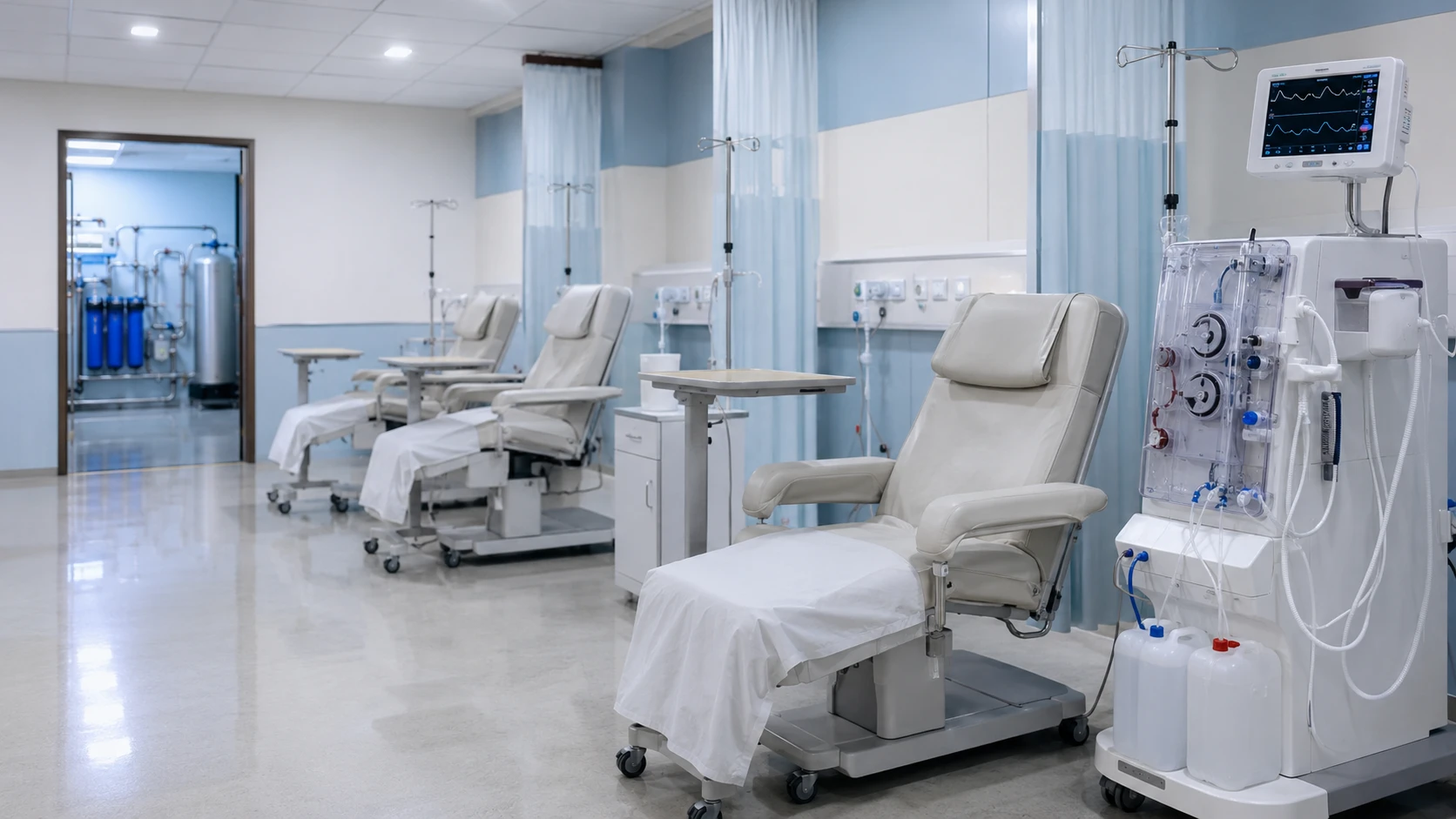
Adequate floor space per dialysis station, allowing room for a bed or recliner, the dialysis machine, a bedside table, and space for staff to move around comfortably during connection and monitoring
A dedicated water treatment room, located close to the dialysis bay to minimize the length of piping runs, since long runs can affect water quality and pressure
Reliable electrical supply with backup power, since a dialysis session that gets interrupted mid-treatment is a genuine safety concern, not just an inconvenience
Proper drainage for both the water treatment system and routine cleaning of the unit
Ventilation and infection control measures, including handwashing stations at each bay and clear separation between clean and used-equipment zones
Isolation or separate bay arrangements for patients with certain infectious conditions, as recommended by clinical protocols
Getting the room layout right the first time is far cheaper than retrofitting it after the unit is already operational, so it's worth involving both a biomedical planner and an architect familiar with dialysis facilities early in the process.
Dialysis Machines and RO Water Treatment: The Specialized Core
At the center of any dialysis unit sit two categories of equipment that are highly specialized and need to be sourced from certified manufacturers with proper technical support: hemodialysis machines and RO (reverse osmosis) water treatment systems.
Hemodialysis machines filter waste products and excess fluid from a patient's blood, and they require precise calibration, routine maintenance, and trained technicians for installation and servicing. Because these machines directly affect patient safety during every single session, hospitals typically work with authorized dealers or manufacturer representatives who can provide installation support, staff training, and ongoing service contracts, rather than treating this as a standard equipment purchase.
RO water treatment dialysis systems are equally critical and, in many ways, easy to underestimate. Dialysis water needs to meet strict purity standards, since even small amounts of contaminants or dissolved minerals in the water used to prepare dialysate can affect patient outcomes over repeated sessions. A typical RO water treatment dialysis setup includes pre-filtration, softening, carbon filtration, and the reverse osmosis unit itself, often paired with storage and distribution loops that keep water quality consistent across all dialysis stations. Regular water testing and system maintenance are not optional extras; they are a core part of running a safe unit, and facilities should budget for this as an ongoing operational cost, not a one-time setup expense.
Because hemodialysis machines and RO water treatment systems are so specialized, this is an area where sourcing directly from certified manufacturers and technically qualified vendors matters more than in almost any other part of the setup.
Dialysis Unit Equipment Checklist: Supporting Equipment
While the machines and water treatment system are the technical core, a functioning dialysis unit also depends on a wide range of supporting equipment and furniture. This is the part of the dialysis unit equipment checklist where hospitals and nursing homes have far more flexibility in sourcing, and where a reliable procurement partner makes a real difference.
Patient beds or recliners for each dialysis station, positioned for both patient comfort during long sessions and easy staff access; many facilities use a mix of hospital beds and dedicated dialysis recliners depending on patient mobility and session length
Patient monitors for tracking vital signs during treatment, particularly important for patients with cardiovascular risk or those new to dialysis
Bedside tables, IV stands, and storage trolleys for supplies at each station
Storage cabinets and racks for consumables, dialyzers, tubing sets, and dressing supplies, kept close to point of use to reduce delays between patients
A basic emergency crash cart, stocked according to hospital protocol, for immediate response to intradialytic complications
Weighing scales for pre- and post-session patient weight checks, a routine but essential part of every dialysis visit
Waste segregation bins compliant with biomedical waste handling norms, given the volume of used tubing, dialyzers, and disposables a unit generates daily
Working through this checklist alongside the technical equipment list keeps the overall project organized, and it highlights just how much of a dialysis unit's day-to-day function depends on furniture and supporting equipment rather than the machines alone.
Staffing and Safety Considerations
Equipment is only half the picture. A dialysis unit needs trained nursing staff experienced in vascular access care, machine operation, and recognizing early signs of complications like hypotension or cramping during a session. Nephrologist availability, either on-site or on call, is typically a requirement for supervising treatment protocols and managing complex cases.
Staff training should also cover water treatment monitoring, infection control between patients, and emergency response procedures specific to dialysis, since the failure modes here (a machine alarm, a sudden drop in blood pressure, a water quality flag) are different from those in a general ward. Facilities should also plan for adequate staff-to-patient ratios during peak shift hours, since dialysis sessions typically run in back-to-back shifts to serve as many patients as possible on a limited number of stations.
Dialysis Center Setup Cost: What Actually Goes Into the Budget
One of the most common questions hospital administrators ask is about dialysis center setup cost, and the honest answer is that it depends on too many variables, city, number of stations, building condition, water source quality, to give one meaningful figure. What matters more is understanding the categories that make up the total spend, so budgeting doesn't stop at the machines.
Equipment cost: hemodialysis machines, RO water treatment systems, beds or recliners, monitors, and supporting furniture
Civil and infrastructure work: room modification, plumbing, drainage, electrical upgrades, and backup power provisioning
Water treatment maintenance: filter replacements, membrane servicing, and routine water testing, which continue for as long as the unit operates
Consumables: dialyzers, bloodlines, dialysate concentrate, and other per-session supplies that recur with every patient visit
Staffing: trained nursing staff, technicians for machine and water system upkeep, and nephrologist consultation arrangements
Compliance and licensing: costs tied to meeting applicable state and central regulatory requirements for dialysis services
Treating equipment cost as the entire budget is one of the most common planning mistakes facilities make. In reality, consumables and water treatment upkeep are recurring costs that continue for the life of the unit, and they deserve as much attention in financial planning as the initial equipment purchase.
Sourcing Supporting Equipment Reliably
For the specialized core, hemodialysis machines and RO water treatment systems, hospitals should work directly with certified manufacturers and authorized technical partners who can guarantee installation support and servicing. For everything else on the dialysis unit equipment checklist, from beds and recliners to monitors, storage furniture, and crash cart basics, HOSPkart is built to help. As a B2B platform connecting hospitals, clinics, diagnostic centers, and nursing homes with certified manufacturers and GST-verified sellers of new medical equipment, HOSPkart makes it easier to source the supporting infrastructure a dialysis unit needs, with Pan-India delivery so procurement isn't limited to what's available locally. If your facility is also planning critical care capacity alongside your dialysis unit, our ICU setup checklist covers the same ground for ICU equipment planning.
Key Takeaways
A dialysis unit setup equipment plan needs to account for far more than the machines themselves. Room layout and hospital dialysis room requirements come first, followed by the specialized core of hemodialysis machines and RO water treatment systems sourced from certified manufacturers, and rounded out by beds, monitors, storage, and crash cart basics that a reliable procurement partner can help source. Add trained staffing, safety protocols, and a realistic view of dialysis center setup cost that includes consumables and water treatment maintenance, not just equipment, and hospitals can plan a unit that stays functional and safe well beyond opening day.

Author
Devendra Sharma
Related posts


15-4-2026
Top 20 Lab Equipment for Diagnostic Labs