 Medical Equipment
 Hospital Furniture
 Medical Disposables
 Rehabilitation
 Diagnostic & Labware
 Eyes & ENT
 Critical Care Equipment
 Urology
 Aesthetic & Dermatology Equipment
 Gastroenterology
 OT Equipment
By Hospkart On 10-04-2026 at 3:02 pm
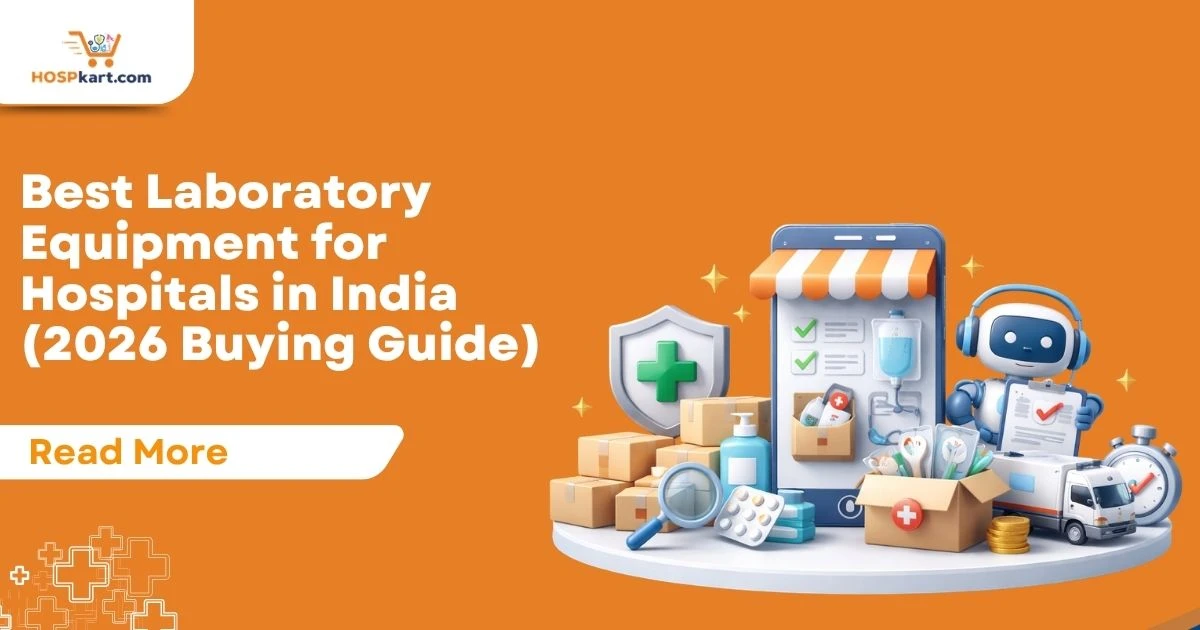
Best Laboratory Equipment for Hospitals in India (2026 Buying Guide)
Laboratory equipment is one of the most important components of current healthcare; it provides accurate diagnosis, planning for treatment, and ensures proper monitoring of a patient’s progress. Modern hospitals rely on advanced laboratory equipment to ensure that they produce accurate and timely results while also maintaining an efficient operating environment.
With healthcare technology still advancing at a fast rate in India, it will be important that hospitals (and/or anyone establishing or modernizing a diagnostic facility) buy the finest laboratory equipment available in order to ensure the best quality of care and efficiency.
Why Laboratory Equipment is Essential for Hospitals
Laboratory equipment is used in all hospitals to conduct diagnostic tests, detect diseases and keep track of patients. Proper laboratory equipment is essential to achieve accurate and timely results of a broad spectrum of laboratory tests (including simple blood tests and more complicated molecular tests). The quality of laboratory equipment in a given hospital is usually directly related to the quality of care and efficiencies in operations of the hospital.
Benefits of High Quality Laboratory Equipment -
The main advantages of investing in quality lab equipment are:
Good and consistent diagnostic test findings.
Rapid turnaround of reports.
Improved patient care and outcomes.
Increased efficiency of the laboratory.
Reduced the chances of introducing errors by humans.
The point is that good laboratory equipment is the basis of any healthcare organization.
Best Laboratory Equipment for Hospitals in India
Here is an overview of some laboratory equipment every hospital needs to have.
1. Hematology Analyzer
The first piece of equipment on our list is the dreaded Hematology Analyzer. A Hematology Analyzer is the second most needed piece of laboratory equipment that is used to analyze blood samples. It allows laboratory personnel to diagnose conditions such as anemia, infections, and other blood disorders.
2. Microscope
The microscope is one of the primary pieces of laboratory equipment to look at the cellular makeup of cells, tissues, and microscopic organisms. Modern digital microscopes have high-resolution capability for analyzing specimens.
3. Centrifuge
Centrifuges are essential laboratory equipment when separating “blood and its components” or separating the deposits of other biological fluids. Centrifuges are used by pathologists and researchers in chemistry laboratories.
4. Biochemistry Analyzer
Biochemistry analyzers are used to analyze blood components such as glucose, cholesterol, and enzymes. They are valuable tools for diagnosing chronic medical conditions.
5. Incubator
An incubator is used for cultivating microorganisms in laboratory settings, and is therefore very important in microbiology labs.
6. Autoclave
An autoclave is used to sterilize laboratory tools and equipment to ensure that the laboratory is safe and free of contaminants.
7. ELISA Reader
An ELISA reader is laboratory equipment used to measure the level of antibodies and infections within a specimen. “It is used by immunologists and virologists.”
8. Blood Gas Analyzer
Blood gases are analyzed by using blood gas analyzers to examine the levels of oxygen and carbon dioxide in the blood, as well as pH.
9. PCR Machine
PCR machines are high-tech laboratory devices that are employed to amplify DNA and perform molecular tests. They were of great significance in COVID-19 testing.
10. Urine Analyzer
The urine analyzers have been extensively utilized in laboratories as part of various diagnostic tests, as well as for early detection of certain underlying medical conditions.
How to Choose the Right Laboratory Equipment
When selecting laboratory equipment for hospitals, it is crucial to consider various factors. Here are some recommendations to take into account:
1. Quality & Certification
The laboratory equipment should always be of acceptable standards, like ISO or CE certification.
2. Accuracy & Performance
Accurate testing is possible using reliable laboratory equipment. When testing patients, accuracy is extremely crucial since it can influence the safety of patients.
3. Cost-Effectiveness
When buying laboratory equipment, one should remember the cost of the equipment, as well as the quality. Less expensive lab equipment can incur higher repair costs or maintenance costs.
4. After-Sales Support
“Choose suppliers that provide installation, training, and maintenance services for laboratory equipment.”
5. Scalability
Purchasing laboratory equipment based on the existing number of patients will enable hospitals to meet the needs of the patients in the future.
Benefits of Buying Laboratory Equipment in Bulk
Bulk purchasing is advantageous for hospitals. Multiple units of laboratory equipment are commonly needed in hospitals, and they can enjoy several benefits when they buy in large quantities:
Lower unit pricing.
Greater negotiating leverage.
Assured quality and uniformity of supply.
More streamlined purchasing processes.
Thus, the bulk buying of laboratory equipment is especially valuable “for” multi-specialty hospitals and centralized diagnostic chains.
Latest Trends in Laboratory Equipment
Technological Advancements and evidence in the healthcare sector are driving rapid changes in laboratory equipment. The following are some of the current trends:
Automation of laboratory equipment.
AI diagnostic systems.
On-the-job and handheld lab apparatus.
Integration with digital health.
Quicker, More Precise Testing Technologies.
Smarter Empowerment of laboratory equipment.
Where to Buy Laboratory Equipment in India
Hospitals depend on the proper sourcing of good suppliers of laboratory equipment. In the past, they used to buy lab supplies through various suppliers, and this was very likely to lead to:
Price inconsistencies
Supply delays
Lack of transparency
New and easier methods of hospital sourcing verified manufacturers and suppliers of laboratory products are being developed by digital platforms like “HOSPkart”.
With these digital platforms, hospitals and laboratory personnel will be able to:
Make “efficient” price comparisons.
Get suppliers through a single online system.
assure quality and credibility.
Easy to manage bulk ordering..
Common Challenges in Laboratory Equipment Procurement
Although there has been an improvement in the laboratory equipment and online platforms, there is a challenge encountered by hospitals in acquiring laboratory equipment from vendors and manufacturers. These challenges include:
Multiple vendor dependency
Absence of transparency in prices.
Delayed deliveries
High procurement costs
All that contributes to the necessity of making the healthcare industry procurement more efficient and smarter.
Final Thoughts
The primary intention of investing in laboratory equipment is to enhance clinical tests, although in the end, it benefits the whole healthcare system.
Every piece of laboratory equipment has an important role in providing accurate diagnoses of patients and ensuring their health outcomes.
Other than the equipment, the hospitals should also examine the procedure of acquisition of the equipment itself. A simplified buying procedure, buying in large quantities, and collaboration with reliable suppliers can lead to a significant reduction in the costs of laboratory equipment and enhance the overall efficiency of hospital functioning.
With the healthcare sector still developing in India, the integration of modern laboratory machines and smart buying systems will be the benchmark of how hospitals will run in the future.
FAQs
Q1. What is the most important laboratory equipment in hospitals?
Ans- Three of the most critical types of “laboratory equipment” in a hospital are microscopes, hematology analyzers, and biochemistry analyzers.
Q2. How can hospitals reduce the cost of laboratory equipment?
Ans: One of the ways that hospitals can reduce the cost of laboratory equipment is by buying in bulk, vendor comparison, and using other services such as Hospkart, which can provide equipment at discounted rates.
Q3. Why is laboratory equipment important in healthcare?
Ans- Laboratory equipment offers proper patient diagnoses so that they can get proper treatment on time, offer proper care, and enhance the level of health of the patient.

Michael is a lover, fighter and hater. He loves to travel, has an app called ‘The Travaluk’. He has travelled over 30 countries so far and dreams to visit every one of them.
Related posts