 Medical Equipment
 Hospital Furniture
 Medical Disposables
 Rehabilitation
 Diagnostic & Labware
 Eyes & ENT
 Critical Care Equipment
 Urology
 Aesthetic & Dermatology Equipment
 Gastroenterology
 OT Equipment
By Hospkart On 24-06-2026 at 11:47 pm
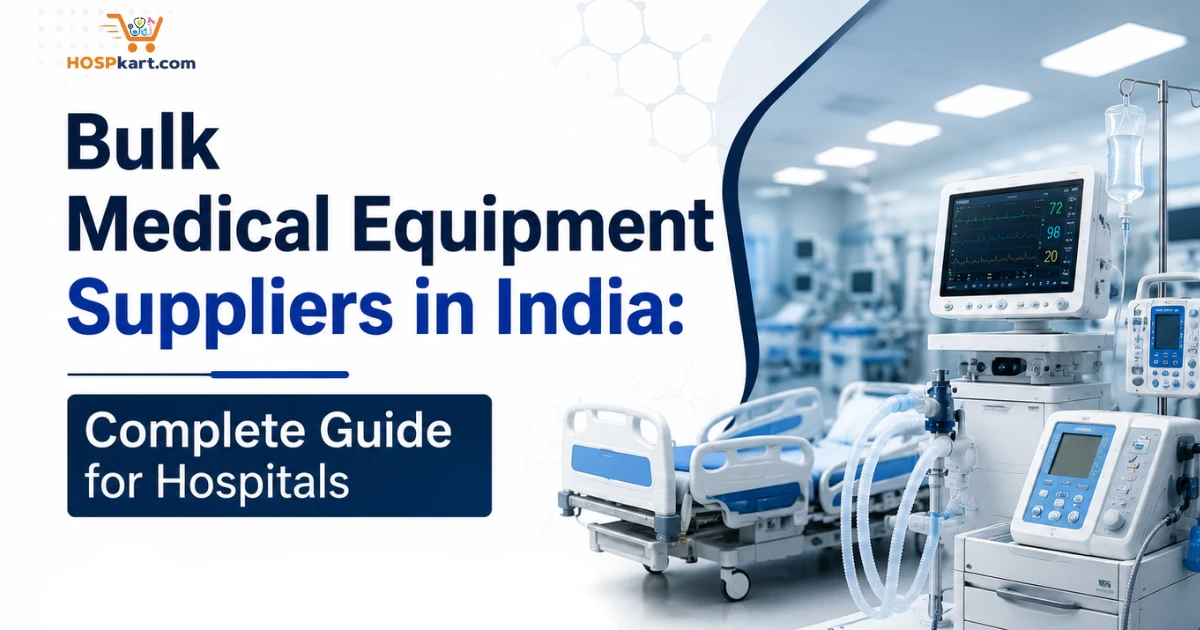
Bulk Medical Equipment Suppliers in India: Complete Guide for Hospitals
The healthcare sector in India is expanding at a fast pace, with hospitals, clinics, diagnostic centers, and healthcare institutions constantly expanding their facilities and services. Healthcare centers develop, and so do their need for dependable medical equipment and hospital supplies.
When it comes to hospital sourcing of medical equipment, it's not simply a matter of buying products. It's about quality, availability, compliance, cost efficiency, and continuous patient care.
That's where bulk medical equipment suppliers come in.
From establishing a new hospital to scaling up your operations or handling the day-to-day needs of ordering medical equipment, the right bulk supplier can make a difference in your efficiency and cost.
This guide covers all aspects of hospitals' knowledge regarding bulk medical equipment suppliers in India and how they can make smarter procurement decisions.
Here's why bulk procurement is important to hospitals.
Hospitals use a variety of healthcare equipment and supplies each day.
Why Bulk Procurement Matters for Hospitals
Hospitals consume a wide range of medical equipment and supplies every day.
These include:
ICU Equipment
OT Equipment
Diagnostic Devices
Laboratory Products
Hospital Furniture
Patient Monitoring Systems
Surgical Instruments
Consumables and Disposables
Emergency Care Equipment
Rehabilitation Equipment
These products have to be bought separately from different suppliers, which can result in:
Higher costs
Vendor dependency
Delayed deliveries
There is a lack of transparency in the price.
Inventory management challenges
Bulk procurement aids hospitals in streamlining sourcing and boosting purchasing efficiency.
Key Benefits of Bulk Procurement
Better Prices: Bulk orders may yield better prices and lower purchasing expenses.
Reliable Supply: Hospitals should have a reliable supply chain to prevent stockouts.
Book Administrative Work: Handling fewer suppliers will make the procurement process easier.
Improved Supplier Terms: When buying volumes are higher, supplier terms may also be better.
Enhanced Inventory Planning: Hospitals can match drug requirements with projected use.
Categories of Medical Equipment Hospitals Purchase in Bulk
Medical Equipment Hospitals Purchase in Bulk can be divided into the following categories:
1. ICU Equipment
Critical care units require advanced equipment such as:
The critical care units need the following advanced equipment:
Ventilators
Multipara monitors
Syringe pumps
Infusion pumps
Defibrillators
These products play an important role in intensive patient monitoring and treatment.
2. Operation Theatre Equipment
The modern operating room is reliant upon:
OT tables
Surgical lights
Anesthesia workstations
Electrosurgical units
Surgical instruments
Quality and compliance are guaranteed by reliable suppliers.
3. Laboratory Equipment
The quality of the laboratory infrastructure is crucial for diagnostic accuracy.
Hospitals commonly source:
Biochemistry analyzers
Hematology analyzers
Microscopes
Centrifuges
Laboratory consumables
4. Patient Monitoring Equipment
Many hospital assets are used frequently; patient monitoring devices are among them.
These include:
ECG machines
Pulse oximeters
Bedside monitors
Vital sign monitors
5. Hospital Furniture
When buying furniture in bulk, you may find that you have to purchase the following:
Hospital beds
ICU beds
Patient trolleys
Wheelchairs
Stretchers
Examination tables
6. Consumables and Disposables
These products generate recurring procurement demand.
Examples include:
Syringes
Gloves
Masks
IV sets
Catheters
Surgical disposables
Challenges Hospitals Face While Procuring Medical Equipment
Despite advancements in healthcare procurement, hospitals still face several common challenges.
1. Limited Price Visibility
Many hospitals rely on local distributors without knowing prevailing market prices. This often results in higher procurement costs.
2. Supplier Dependency
Hospitals frequently depend on a small number of vendors, increasing procurement risk.
3. Emergency Purchasing
Poor planning can lead to urgent purchases at premium prices.
4. Product Availability Issues
Delays in sourcing critical equipment can impact patient care.
5. Quality Concerns
Not all suppliers maintain consistent quality standards. Hospitals must ensure products meet regulatory and operational requirements.
What to Look for in a Bulk Medical Equipment Supplier
Selecting the right supplier is one of the most important procurement decisions a hospital can make.
1. Product Quality
Always verify:
Certifications
Product specifications
Compliance standards
Manufacturer reputation
2. Supplier Reliability
Evaluate suppliers based on:
Delivery timelines
Service responsiveness
Product consistency
Industry experience
3. Product Range
Hospitals benefit from suppliers who offer multiple product categories under one platform.
4. Pricing Transparency
The supplier should provide clear pricing structures without hidden costs.
5. After-Sales Support
Technical support and service availability are important, particularly for high-value medical equipment.
The Rise of Digital Procurement Platforms
Traditional procurement methods often involve:
Phone calls
Quotations
Manual comparisons
Multiple vendor interactions
Today, hospitals are increasingly adopting digital procurement platforms that simplify sourcing and improve visibility.
Benefits include:
Faster product discovery
Supplier comparison
Better pricing visibility
Reduced procurement cycle times
Improved decision-making
Digital procurement is helping hospitals move from reactive purchasing to strategic procurement planning.
Why Direct Manufacturer Access Matters
One of the biggest trends in healthcare procurement is direct manufacturer sourcing.
Traditionally, products pass through multiple intermediaries before reaching hospitals.
Each layer adds:
Additional costs
Communication delays
Reduced visibility
Direct manufacturer access offers several advantages.
Better Pricing
Hospitals often gain access to more competitive rates.
Greater Transparency
Direct communication improves procurement visibility.
Improved Product Availability
Manufacturers can provide better insights into production schedules and inventory.
Reduced Procurement Leakage
Fewer intermediaries often lead to more efficient purchasing.
How HOSPkart Helps Hospitals Procure Smarter
As healthcare procurement becomes increasingly complex, hospitals need better procurement solutions.
HOSPkart is building a direct manufacturer-to-hospital procurement ecosystem designed specifically for healthcare institutions.
The platform helps hospitals source:
Medical Equipment
Hospital Supplies
Diagnostic Products
Consumables
Disposables
Furniture
Emergency Care Equipment
Benefits of HOSPkart
Verified Suppliers: Hospitals gain access to trusted manufacturers and suppliers.
Better Price Visibility: Procurement teams can make informed purchasing decisions.
Wider Product Selection: Multiple product categories are available through a single platform.
Reduced Supplier Dependency: Hospitals can diversify sourcing options.
Smarter Procurement Planning: Improved visibility enables better forecasting and purchasing.
The objective is simple:
To help hospitals procure efficiently while maintaining quality, transparency, and reliability.
Future Trends in Medical Equipment Procurement
The trends that will shape the future of hospital procurement include:
1. Procurement Intelligence
Through data-driven insights, hospitals will be able to discover areas of savings and minimise procurement risks.
2. Supplier Performance Analytics
Suppliers will be increasingly judged on measurable performance at the hospital.
3. Predictive Inventory Management
Technology will be used to help predict demand and minimise emergency buying.
4. Digital Procurement Ecosystems
Fragmented procurement processes will still be phased out for the benefit of centralized platforms.
5. Increased Transparency
Hospitals will want to see more transparency in pricing, supplier performance, and availability of products.
Conclusion
Medical equipment procurement has become more than just a purchasing activity.
It has now become an important part of the hospital operations.
Making the right procurement decisions can drive down costs, enhance operational efficiency, mitigate supply risk, and facilitate improved patient care.
Collaborating with dependable bulk medical equipment suppliers is a vital component of hospitals' efforts to scale efficiently.
With the ongoing evolution of health care, hospitals that adopt smarter procurement processes, direct manufacturer connections, and electronic procurement systems will be more ready to provide quality health care while keeping the operating wheel in their own hands.
In the health care sector, procurement is more than simply a process of purchasing products.
It's all about the right product at the right time.
Frequently Asked Questions (FAQs)
Q-1. Why should hospitals buy medical equipment in bulk?
Ans- Bulk procurement helps hospitals reduce costs, improve inventory management, ensure consistent product availability, and simplify vendor management. It also provides better negotiation power and procurement efficiency.
Q-2. What types of medical equipment are commonly purchased in bulk by hospitals?
Ans- Hospitals typically procure ICU equipment, OT equipment, patient monitoring devices, laboratory equipment, hospital furniture, surgical instruments, consumables, disposables, and emergency care products in bulk.
Q-3. How can hospitals identify reliable bulk medical equipment suppliers in India?
Ans- Hospitals should evaluate suppliers based on product quality, certifications, delivery performance, industry experience, pricing transparency, after-sales support, and customer reviews before making procurement decisions.
Q-4. What are the benefits of sourcing directly from manufacturers?
Ans- Direct manufacturer sourcing can provide better pricing, improved product availability, greater transparency, reduced dependency on intermediaries, and better procurement planning for healthcare facilities.
Q-5. How does HOSPkart help hospitals with medical equipment procurement?
Ans- HOSPkart connects hospitals with verified manufacturers and suppliers, helping healthcare facilities access quality products, better pricing visibility, reliable sourcing options, and a more streamlined procurement process through a single platform.

Michael is a lover, fighter and hater. He loves to travel, has an app called ‘The Travaluk’. He has travelled over 30 countries so far and dreams to visit every one of them.
Related posts


15-4-2026
Top 20 Lab Equipment for Diagnostic Labs